N is for a nesting Neovenator and a nice newt…
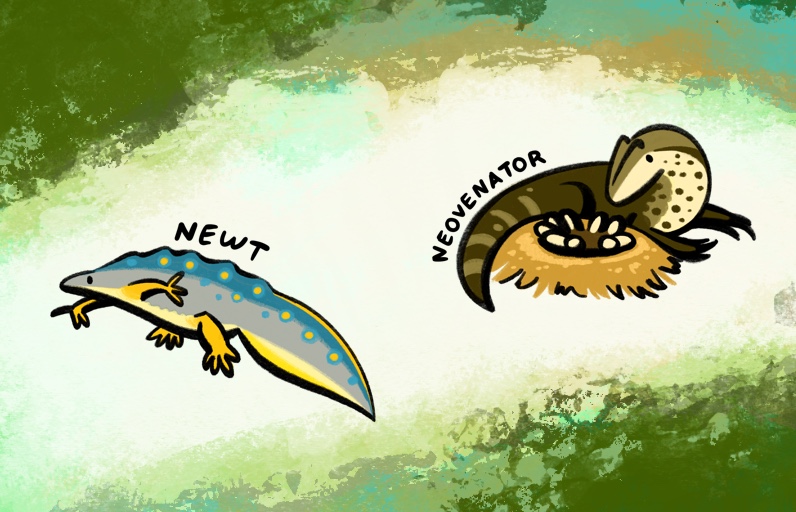
Neovenator is a large, meat-eating (carnivorous) dinosaur discovered on the Isle of Wight. This is an island just off the southern coast of England, and is home to Early-Cretaceous animals like Iguanodon, Hypsolophodon, and Polacanthus.
It was a rather dry environment prone to frequent wildfires, with stubby, evergreen trees and drought-hardy ferns. There are a few salamanders that lived in the moister undergrowth near rivers and lakes, but newts wouldn’t appear until closer to the end of the Cretaceous, so our Neovenator mama would never see one.
What is the difference between a salamander and a newt?
– All newts are salamanders, but not all salamanders are newts. Just like birds are a branch on the dinosaur family tree, newts are a branch on the salamander family tree, only much more closely related.
– Both newts and salamanders start life in water and then change to live on land like frogs, but newts always stay close to water. A bit like how toads are most often found on land, while frogs are mostly in water or very wet habitats.
– Newts change again as adults to go back to life in water. Their tails are like paddles and their feet are webbed.
So with so much dependence on water, you can see how there might be salamanders where Neovenator lived, but not newts. Take a look at some photos of Corsica, France, or the shrubby chaparral of Baja California, for a better idea of what it’s home may have looked like in the Early Cretaceous.
The Critter of the Month!
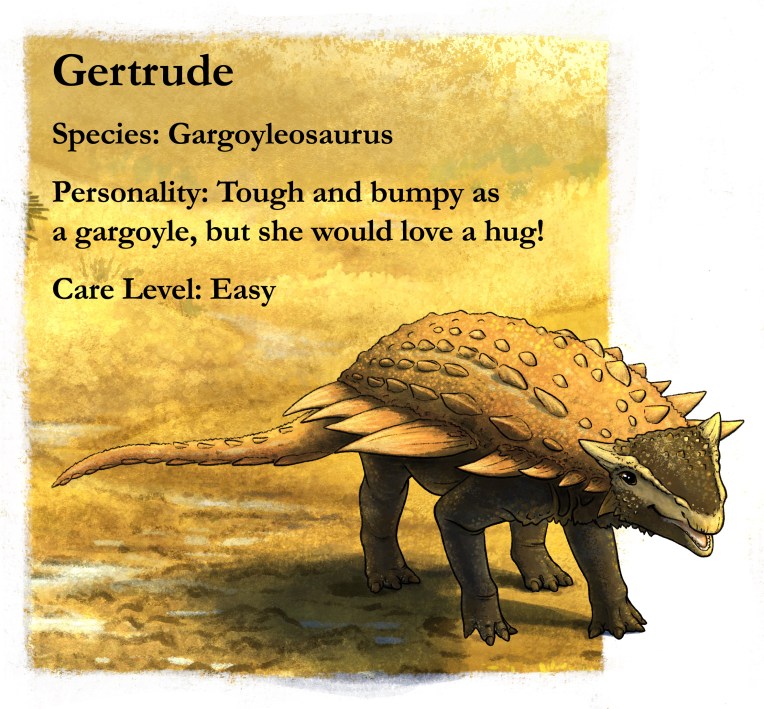
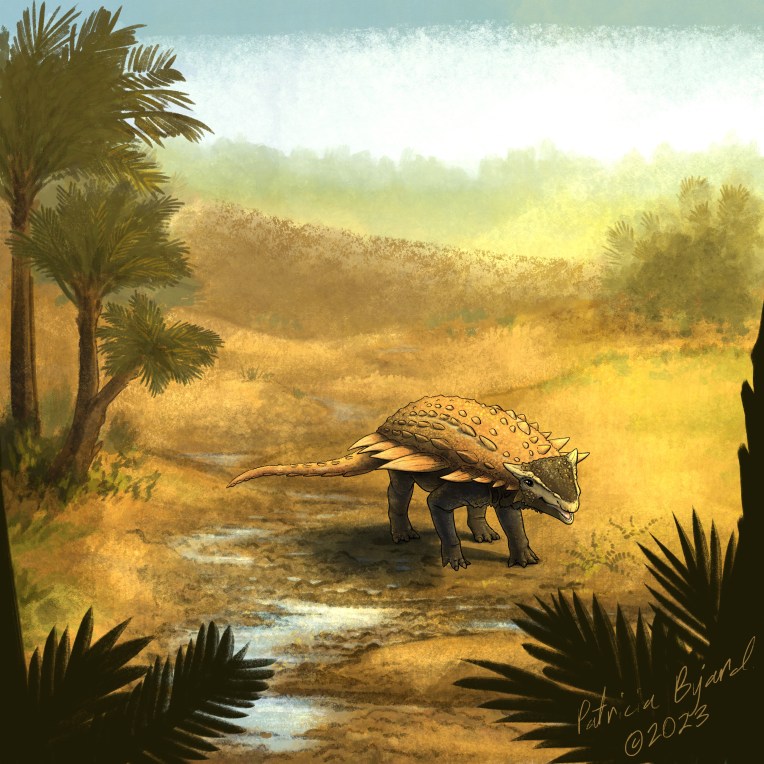
Gertrude the Gargoyleosaurus is another critter that’s used to hot and dry habitats, and she is happy to see you!
Gertrude is pretty chill, and is hardly ever surprised by anything. All she wants is to find a nice mud wallow or soft sandy spot to snuggle into. She won’t mind if little kids clamber on her back while she’s napping, though you might hear her sniffing for a possible treat or catch her crack an eye open for a better look.
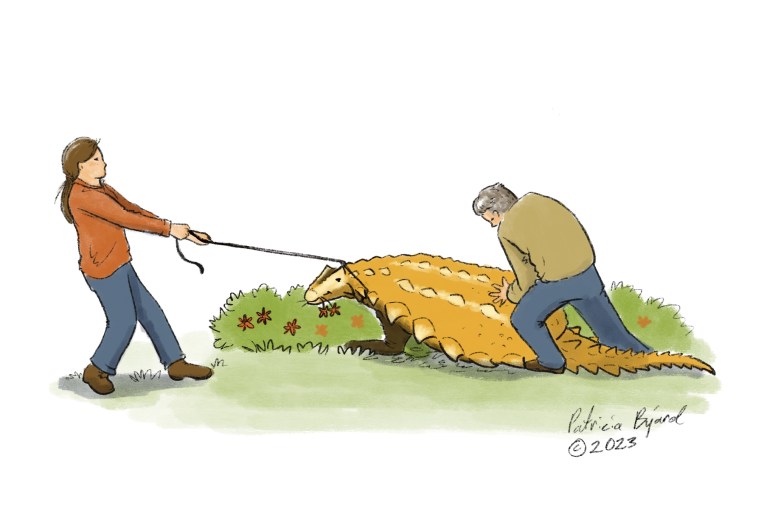
And once she’s comfy, she’s there to stay! She’s not the biggest armored dino around, but she can really hunker down if she has a mind to…the time she got into my zinnias she was perfectly content to munch away on her newfound snack, no matter how much we pushed and pulled. So we had to find a special treat that was even tastier than zinnias, especially since flowers didn’t grow in the Jurassic period and she might get a stomach ache.
Luckily Pete had some tender fern sprouts. Young fern leaves that are still curled and soft are called fiddle heads, and she loves them!
See you October 1st for the next Critter of the Month!
This fearsome little critter has a heart of gold that is bigger than he is!
Share your guess in the comments! He’ll be one of the critters over on the critter page. 🙂
 Pete's Paleo Petshop