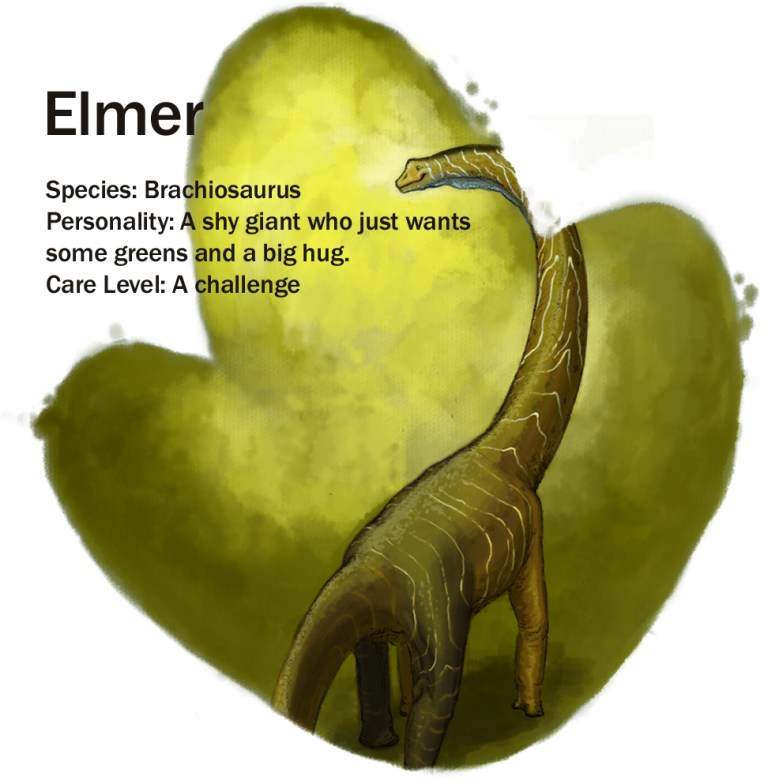
Meet Elmer. He’s a little shy, and likes staying in his comfort zone, but he’ll be your best giant friend if you give him some greens and a big hug.
The best way to a dino’s heart is through his stomach, as they say… Continue reading
The best way to a dino’s heart is through his stomach, as they say… Continue reading

Twig may be small, but he’s not nearly as teeny as most “educational” sources would have you believe. Continue reading
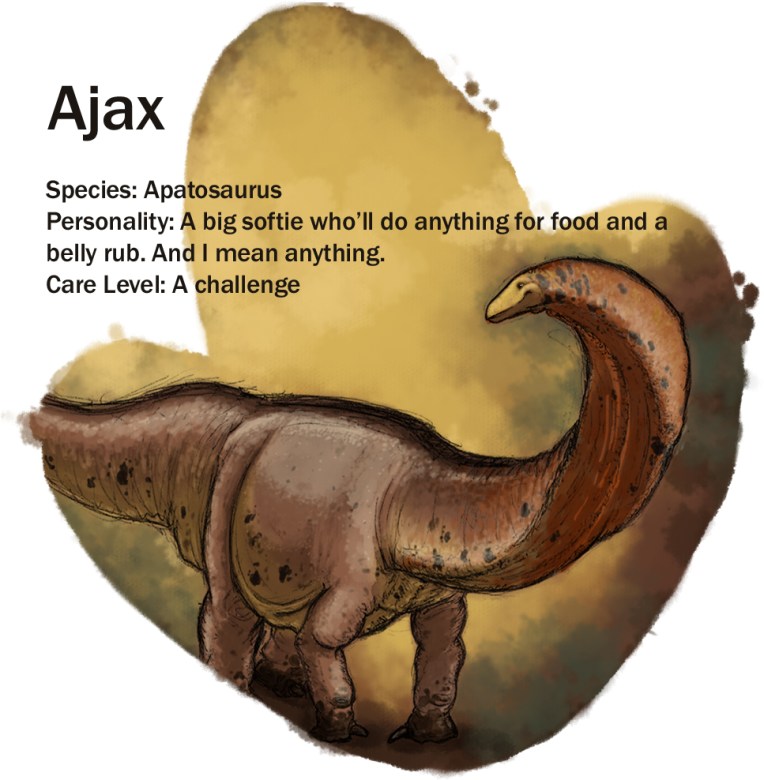
Ajax is big, heavy, and always hungry. He’s got a knack for sniffing out treats and getting into places he shouldn’t. He really didn’t think things through when he squeezed into the shed that one time… Continue reading
Pretty please with cherries on top? Continue reading

Skittles is happy to see you! She wonders if you would please, pretty please, give her a treat. Can you resist those puppy-dog eyes?
She may be about the size of a golden retriever, but believe it or not, Skittles here is the great-great-great-great-grandmother of Stegosaurus!
It’s hard to imagine how long a time span the Jurassic period covers, but we can get a few hints when we see that a little critter like this had enough time to change and diversify into animals like the spike-tailed Stegosaurus, or the armored, club-tailed Ankylosaurus.
The Jurassic period started at the end of the Triassic period (big extinction event there, to separate the two), and lasted 56.3 million years until the beginning of the Cretaceous.
56.3 million years. Think about that. Humans have been around for about 2 million. Between us and the latest dinosaurs like T-rex? About 65 million years.
So that means Dinosaurs had their “golden age” in the Jurassic for almost as long as the nearest T-rex is to us. Pretty mindboggling.
And that’s not even thinking about the Triassic and Cretaceous periods yet…
Dinosaurs have been around for a looong time (especially if you count birds living today!).
Skittles is just happy to have a few moments to cuddle. 🙂 Completely oblivious to how long dinosaurs have been around. Or that she’s related to Steggy. 😛

One more down, three more to go!
I was doing a little research on Createspace, and I discovered a few things…
Createspace is a company that allows you to sell a print book on Amazon. It’s not the only one out there, but it’s my best (and cheapest) option at the moment, so that’s the one I’m going with.
I was double checking what sizes I can print the book in and, alas, 10×10 inches is not available. 😦
10×10 is a fairly common size for children’s picture books, so I guess I assumed it was a “standard” size, but there’s always trouble when you assume. It’s not what I would like, but I’ll be printing this book in a “standard” 8.25×8.25 inches instead. On the plus side, this means it’ll be available at a cheaper price for you. 🙂
A quick interesting tidbit on the money side of things. (because Createspace has a little calculator to estimate royalties)
The average paperback picture book that is 8.25×8.25 inches sells for about $5.
If I sell my book for that price, I lose money with every book (about $3 in fact).
The average hardback picture book in the same size sells for about $10.
If I sell my book for $10, then I earn about $4
If I sell my book for $9.50, then I earn just over $3.
Naturally, you understand if I don’t want to lose money for every book I sell. I love what I’m doing, and it’s fun, but it’s also a way to help pay bills. 😛
So for now, while I’m still new at this and figuring things out, I’ll stick with Createspace and print an 8.25×8.25 paperback book (Createspace doesn’t really print hardbacks). I’ll sell it for $9.50, and earn about $3 per book.
$3 doesn’t sound like much, but this is a book we’re talking about. The key to earning money with books is to have a lot of them. The average number of books 6 figure authors have in their back-list is about 30, so I’ve got a long way to go!
I’m in this author business for the long haul. $3 or $10 here and there adds up after a while, especially if I try my very best to go out and meet my audience so that you know I exist. It’s not enough to have a bunch of books. You have to put yourself out there and let others know you exist too. 🙂
Later on, once the series has a gained more of an audience, I can host a kickstarter event to fund the printing of the full size, beautiful hardback books. That’ll be awesome. 😀
Thank you for stopping by, I really appreciate you spending a little time with me. 🙂
And for my fellow Americans, I hope you had a great (and safe!) 4th of July yesterday!
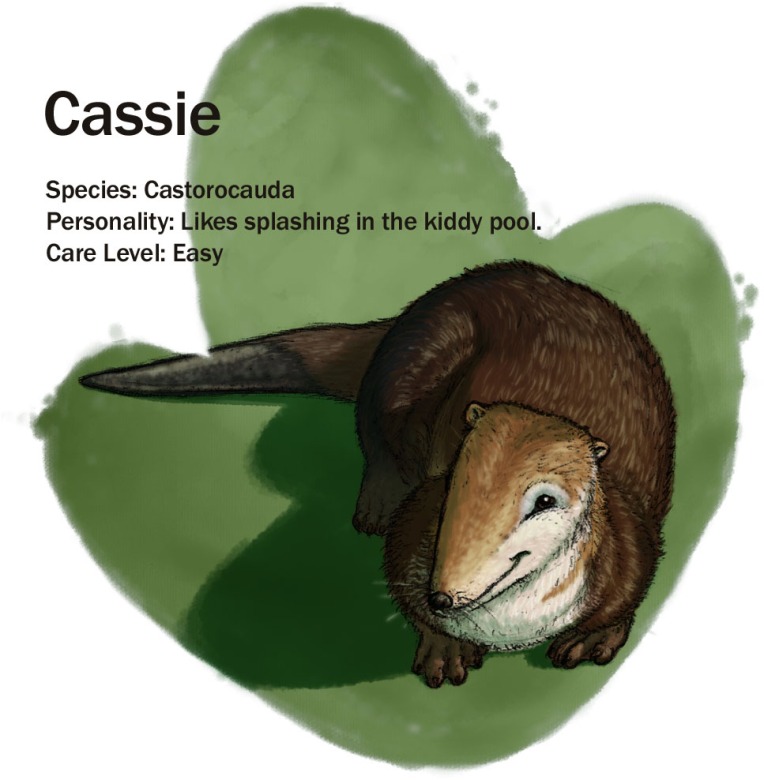
This critter is furry, loves to swim, and has a flat, sorta scaly paddle tail…Is she even in the right time period?! 😉
Share your guess in the comments! She’ll be one of the critters over on the critter page. 🙂
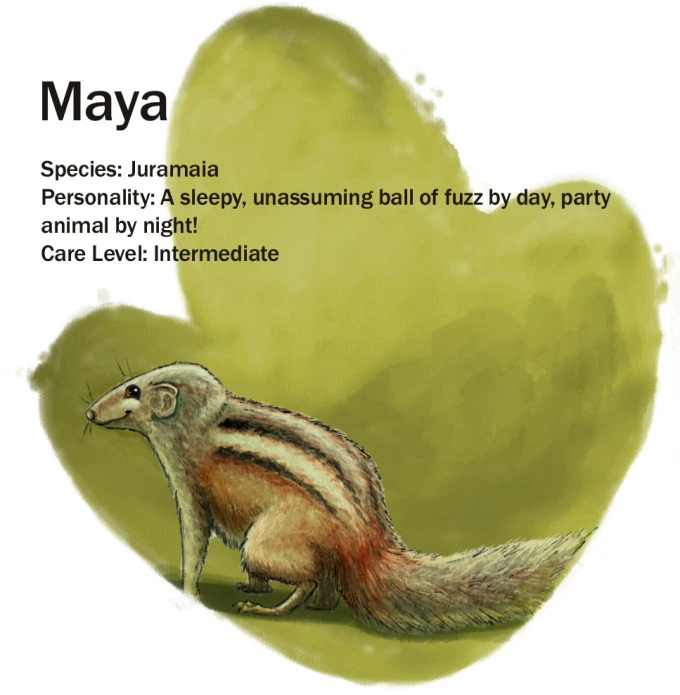
Wait a second…what’s a squirrel doing in a dinosaur book? Well I’m glad you asked. So far, her kind is the first mammal discovered that nourishes her babies in utero with a placenta. A placental mammal. (humans, dogs, and elephants are also placental mammals) This is unique from marsupials like kangaroos, or egg laying monotremes like platypus. 🙂 Continue reading

Gulper has a giant mouth, but don’t worry, all he eats are tiny sea critters called plankton- just like whales. 🙂 Continue reading
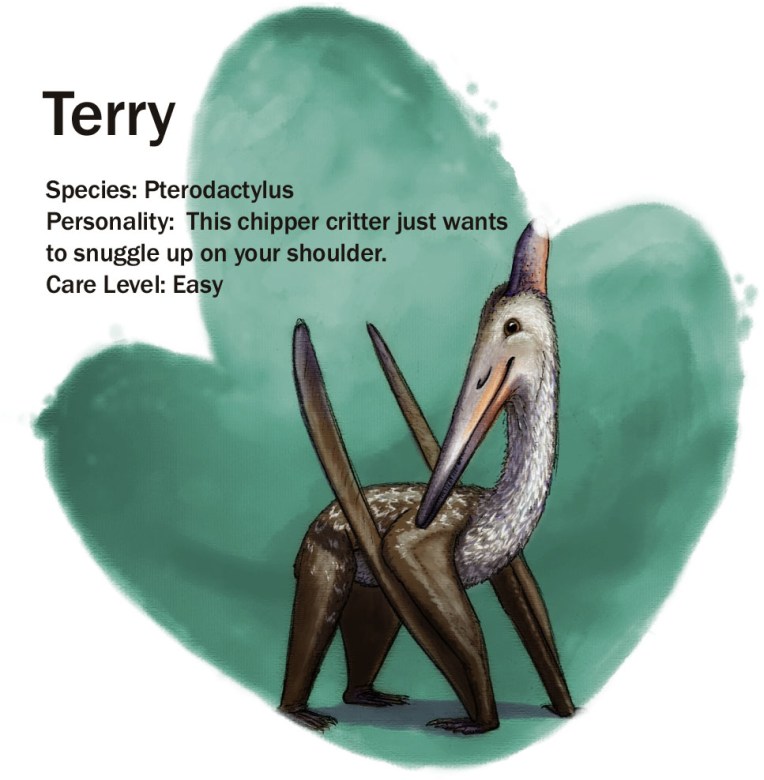
Terry always likes a snack, especially small morsels like snails, grubs, and worms she digs up. That sandwich looks quite tempting though, and she won’t turn her nose up at an opportunity to snatch it out of your hand, so keep an eye and a firm hold on it. 😀 Continue reading

There we go, he smells it! See these nice big strips of jerky? He’ll love it. I brought some for you too if you want to give him a special treat. Continue reading
 Pete's Paleo Petshop