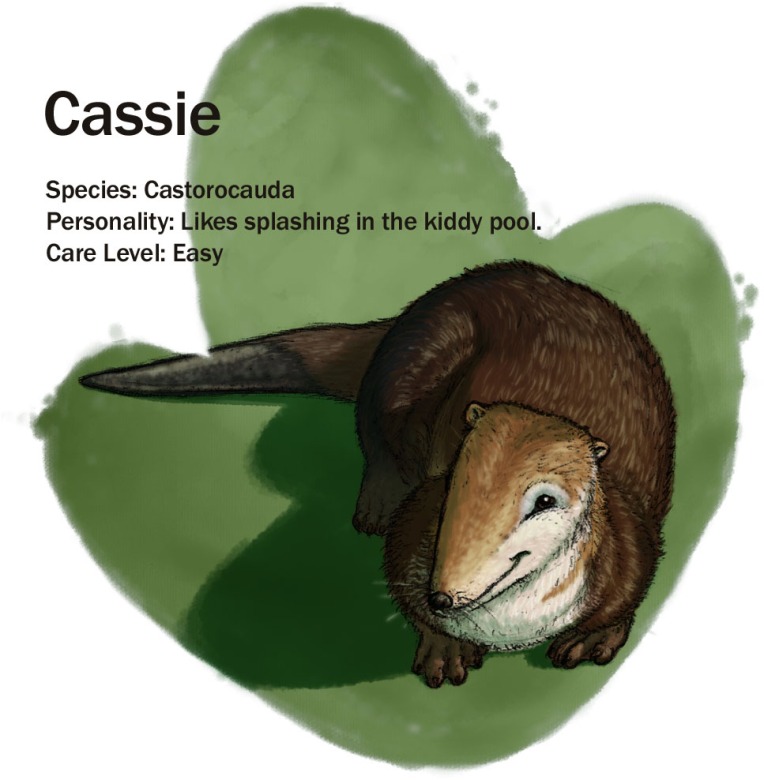
Meet Cassie. All she wants in life is to get her feet wet, and perhaps a fish or two. Yes, she would really like fish. Do you have some?
Pretty please with cherries on top? Continue reading
Pretty please with cherries on top? Continue reading

Look at that giant, toothy grin. He’s sure happy to see you! He’s looking for a treat or two (or ten), so that’s what this stinky bucket of slimy deliciousness is for. Tigger has a huge appetite, and he’ll eat anything that fits in that giant mouth of his. Even dinosaurs if one of them decides to go for a swim. (you heard right, dinos can swim, we have tracks to prove it) Continue reading

Picasso looks very happy to see you, and he wonders very much if you like his red crest. He’s very proud of it, you see, and he’s been strutting around the field like a very large rooster. Continue reading
Pretty please with cherries on top? Continue reading
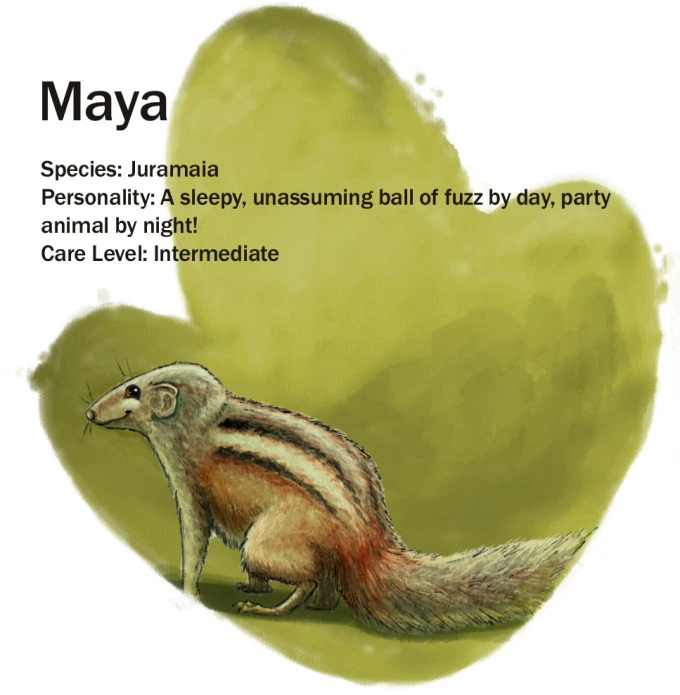
Wait a second…what’s a squirrel doing in a dinosaur book? Well I’m glad you asked. So far, her kind is the first mammal discovered that nourishes her babies in utero with a placenta. A placental mammal. (humans, dogs, and elephants are also placental mammals) This is unique from marsupials like kangaroos, or egg laying monotremes like platypus. 🙂 Continue reading
Look at that giant, toothy grin. He’s sure happy to see you! He’s looking for a treat or two (or ten), so that’s what this stinky bucket of slimy deliciousness is for. Tigger has a huge appetite, and he’ll eat anything that fits in that giant mouth of his. Even dinosaurs if one of them decides to go for a swim. (you heard right, dinos can swim, we have tracks to prove it) Continue reading
Picasso looks very happy to see you, and he wonders very much if you like his red crest. He’s very proud of it, you see, and he’s been strutting around the field like a very large rooster. Continue reading

Wait a second…what’s a squirrel doing in a dinosaur book? Well I’m glad you asked. So far, her kind is the first mammal discovered that nourishes her babies in utero with a placenta. A placental mammal. This is unique from marsupials like kangaroos, or egg laying monotremes like platypus. 🙂
My little girl keeps calling Maya a squirrel (she’s 2 🙂 ), but she’s a bit more like a tree shrew. Little Maya has sharp little teeth that are great for just about anything she can get her paws on, but bugs are her favorite. That slender nose helps her sniff them out in the dark. She has long arms and sharp claws that make her completely at home in the tree tops.
When you’re the size of a squirrel it’s good to be out of reach of giant dinosaurs!
Making progress… Continue reading
Unfortunately, sometimes even “educational” books and movies will lump in the other critters in the same group as the dinosaurs. So how can you tell which is which?
Let’s have some fun with a little quiz. Can you tell me which critters are the dinosaurs, and which ones aren’t?
First off, a handy dandy dino checklist.
Fun Fact on that last one:
Sir Richard Owen coined the name Dinosauria based on Megalosaurus, Iguanodon, and Hylaeosaurus (a plant-eater built like an armored tank, but without the club-tail of more popular armored dinos. Cretaceous England).
All three of these critters can still be seen today at the Crystal Palace in London, where sculptures were built based on the latest scientific knowledge of the 19th century. It’s in a sad state compared to the grandeur of its golden years, but it’s still on my bucket list. 😀
Dinosauria is often translated from the Greek as “Terrible Lizard”, but it can also translate to “Fearfully Great Reptile”. Owen seems to have named the creatures based on their awesome size and how majestic they must’ve looked in life. Not on their “terrible” teeth, spikes, and claws.
Now that you know the features that make a dinosaur, let’s get started! 😀 I’ll leave the answers for the very end, so that you can test yourself.

First up, Bowser the Ceratosaurus! He’s big, and lived in Jurassic North America. He has a nice beefy tail with the muscle power to move his legs forward, one foot in front of the other.
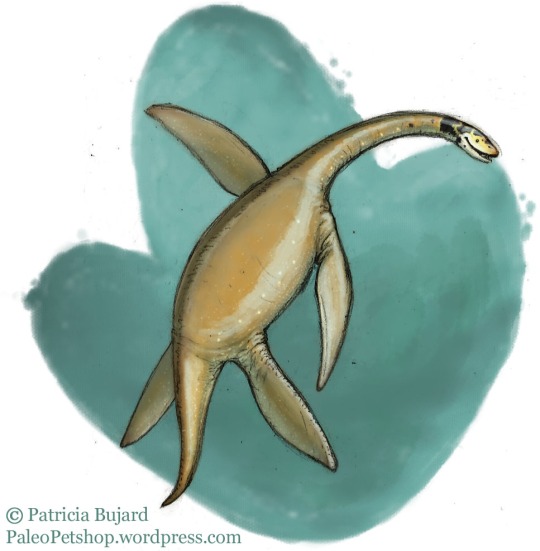
Look who’s come out of hiding…Nessie the Plesiosaurus! Those flippers are great for gliding through shallow Jurassic seas or paddling in murky rivers. You’ll find her swimming around in Jurassic England.
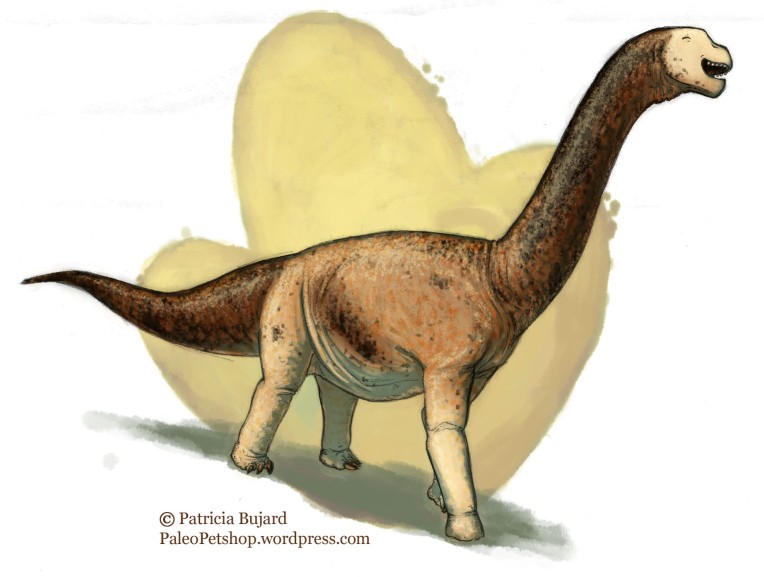
Here comes Bella the Camarasaurus! She’s a big girl, and proud of it, but she has no problem moving all that weight around. Her legs are like pillars, strong and sturdy under her body. You can find her in Jurassic North America.
 Why hello there, Dan the Dimetrodon is here for a special visit. He came by all the way from Permian North America, an earlier time than the Triassic period.
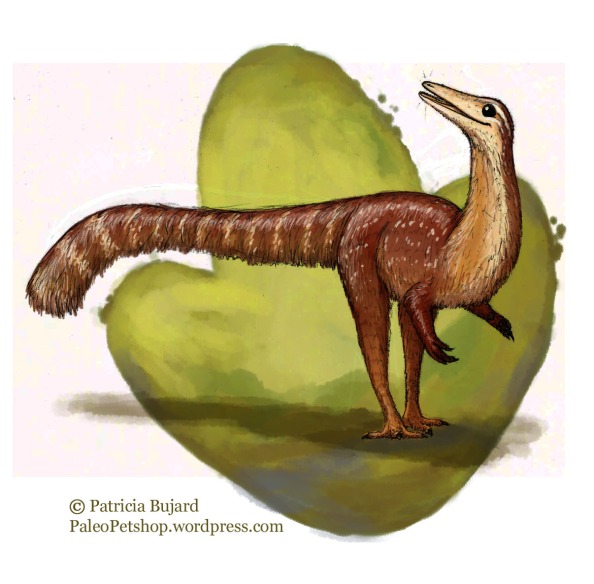
Twig the Compsognathus is a little guy, only as big as a turkey, but that just means he’s extra fast. He runs like a roadrunner, and easily snatches up splay-legged lizards. You can find him in Jurassic Germany.
(quick note: there are rumors of scale patches on the legs and tail for this little guy, but I haven’t been able to find the papers describing them. So I’ve given him feathers based on a close cousin.)

Flipper the Ichthyosaurus comes in with a splash! But what is he? You can find him cruising Asian and European waters during the Triassic and Jurassic periods.

Tango the Archaeopteryx loves to sing and dance, and no lizard can dance like Tango can! He’s got the finesse of a duck and the enthusiasm of a parakeet. You can find him and his fancy feathers in Jurassic Germany.

Here comes Tigger the Pliosaurus with a big grin. An apex predator in the water, this big guy would’ve made the Jurassic seas around Europe and South America a dangerous place to be.

Are those…Turkeys? Why yes, yes they are. They’re showing off their festive plumage by strutting with one foot in front of the other. You probably see one at your dinner table on occasion.

Ron the Rhamphorynchus has dropped by to see you. Those teeth look a bit vicious, but he’s just an excitable fuzzball really. You can find him soaring through the Jurassic skies in Germany.
Think you got them all? Let’s check and see!
Fun fact: Plesiosaurus was given that name because her kind is “nearer to dinosaurs” than Ichthyosaurs like Flipper.
How did you do? If you didn’t do very well, don’t feel too bad. There’s a lot of misinformation out there, even from sources that are supposed to be educational. And really, it’s a lot easier just to call them all dinosaurs, instead of having to remember all the different names for the different groups. 🙂
Quick Question: What’s your biggest source of info about dinosaurs? Jurassic Park? The news? Dino obsessed friend or kid? Your own research? I’d love to hear from you in the comments! 😀
 Pete's Paleo Petshop