
With a library storytime and art display scheduled for the month of July, I’ve been having a bit of fun prepping activities for the children.
I notice with a lot of the events I go to at the library that the children do best with a combination of stories and hands-on activities. So I made some pin puppets for the kids to make and tested them out with my kids. The black spots are where the brads go to attach the pieces.
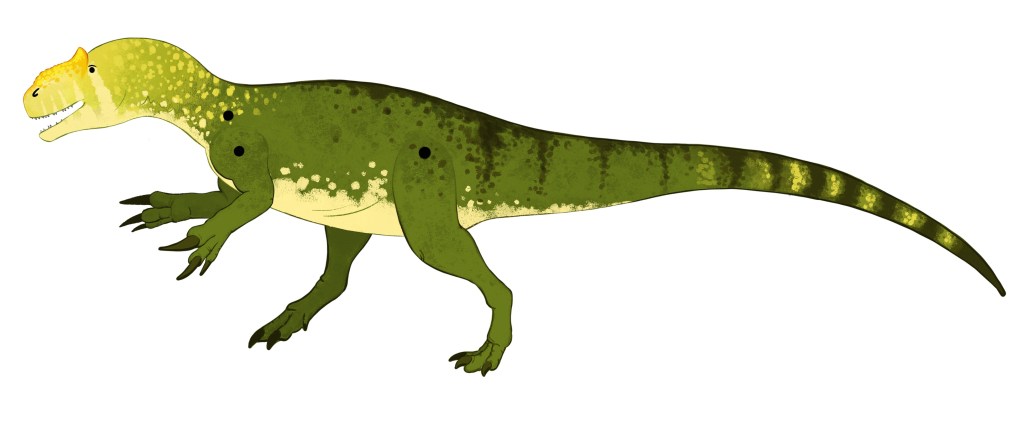
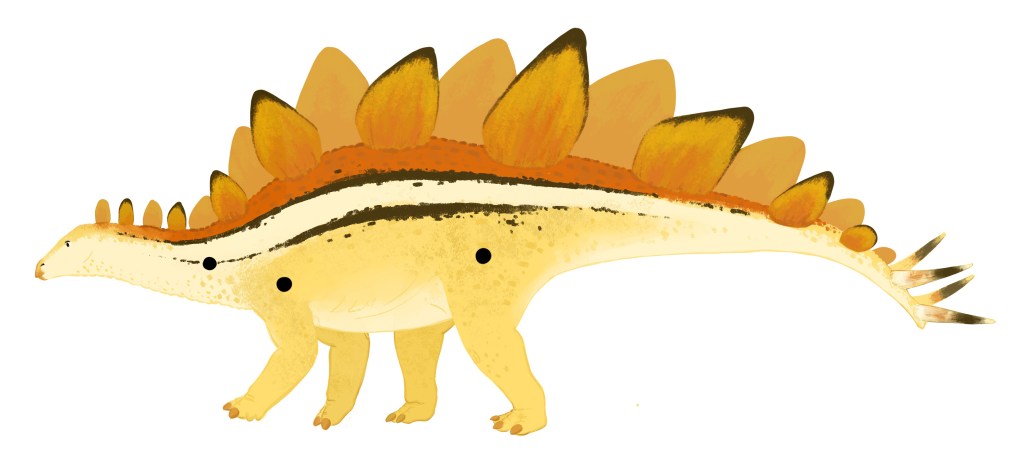
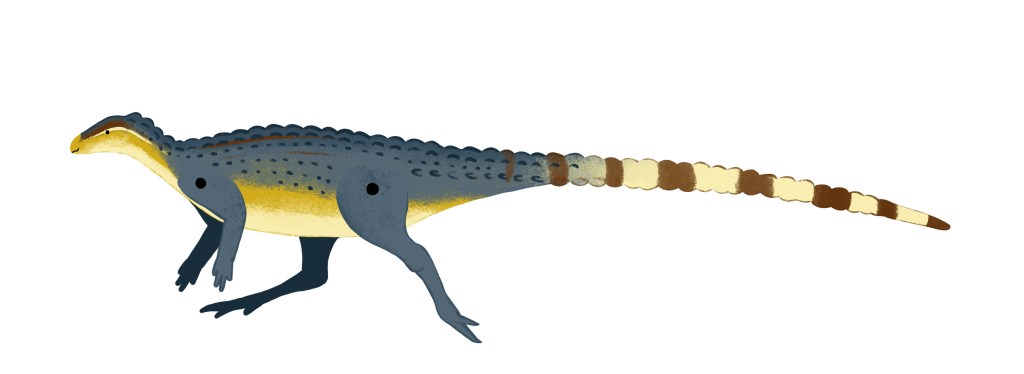
Not much for progress this month. At least not the shiny kind that’s good to put in a post, so I hope you enjoy these.
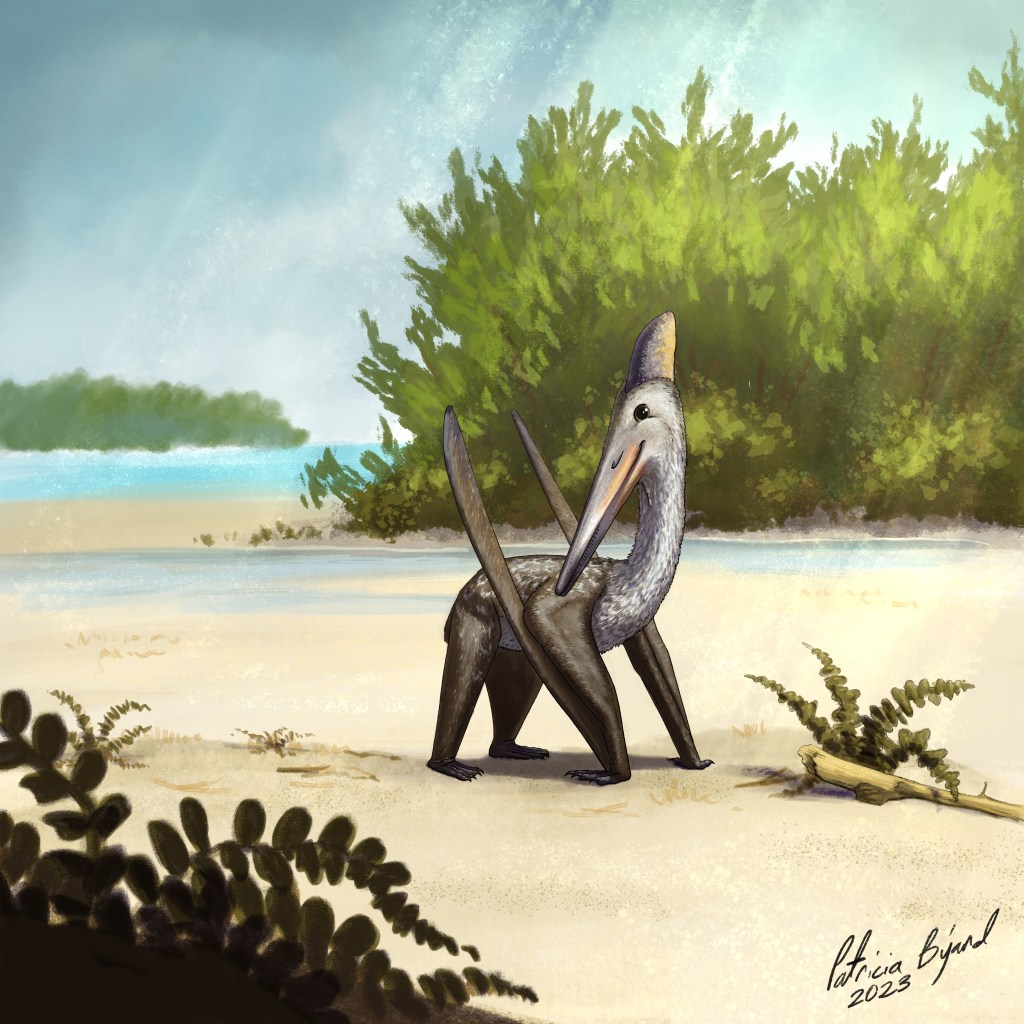
And the Critter of the Month is…
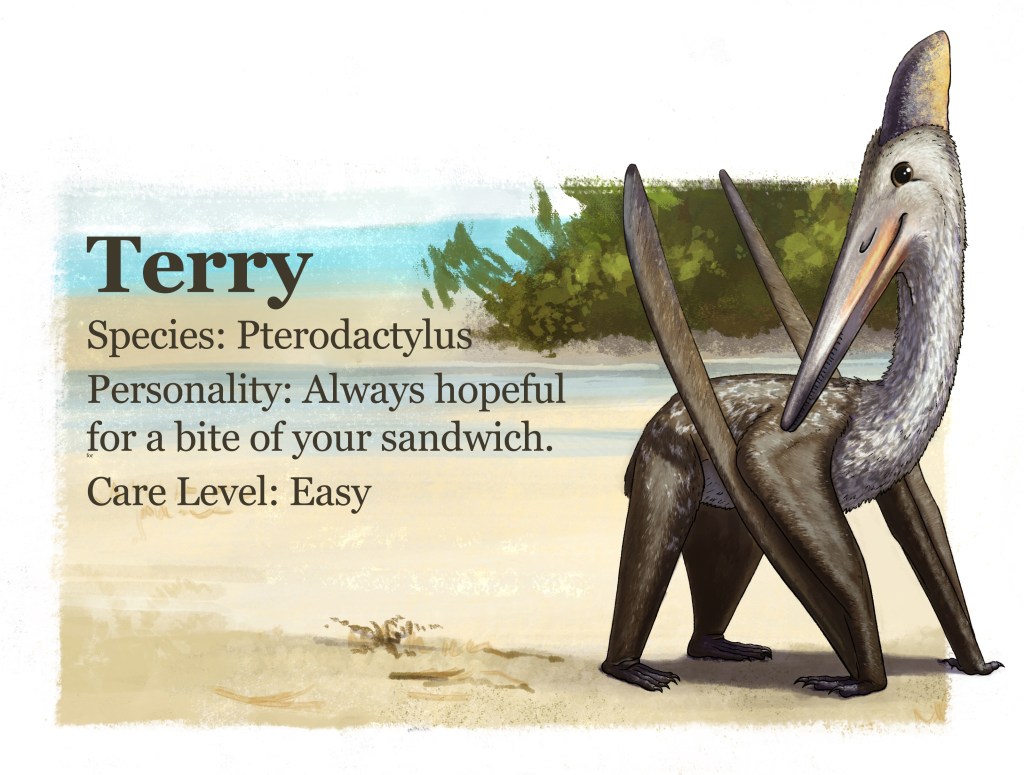
I imagine Pterodactylus scuttling along the beach in search of sand crabs, or wading into puddles for dragonfly nymphs or worms. Perhaps, like many seabirds, a whole flock of them could be seen hunting in the shallows.
The birds down below are called willets. They are medium-sized shorebirds that wade in the shallow waves and beachside pools, and use their bills to probe into the sand for all sorts of shrimp, tiny crabs, worms, and other shelled creatures. Their bills are a little shorter than other, more specialized shore birds, and they make me think a lot about possible feeding behavior for Pterodactylus.
Of course, I’m not a pterosaur expert, so this is just speculation. I like to imagine Terry with similar, birdlike mannerisms, even though she walks with four legs instead of two. Can you picture it in your mind’s eye while watching the clips down below?
Now that Terry is all nice and shiny she is ready for adoption! Just click on the picture below or CLICK HERE to go to Redbubble and take a look at her.

See you June 1st for the next Critter of the Month!
This swimmer likes a game of hide and seek, can you find her? 🙂
Share your guess in the comments! She’ll be one of the critters over on the critter page. 🙂


I love the style of the pin puppets – so excited to see them when they’re put together! I also really like Terry’s new background. 😀 The sun rays are so shiny!
I don’t think I’ve heard of willets before, but their names are quite fitting. Are they the same as sandpipers? Do you think pterodactylus had pretty similar nesting/hunting behaviors to these birds?
LikeLike
Hi Brownie, thank you for stopping by! I’m so glad you like the pin puppets. I think they are adorable, and I’ll have to make some more. It’s the next best thing since I can’t get toys made of my characters yet lol. Big dreams for the future! 😀 Extra bonus that the kids love them.
Hehe, sometimes I’m not so sure how an illustration will turn out, because the messy middle can feel a little off to me, if you know what I mean. The atmospheric light, lens flares, dust motes, or other shiny or misty bits always manage to really make it pop in the end. So it works out. Just trust in the process.
I think the willets are adorable. I think they are somewhat related to sandpipers, but they are bigger. Of course you know that sandpipers are usually right on the shoreline. I think they mostly eat the tiny sand crabs and snails that like to burrow just under the sand by the waves. The willets will actually wade out into the water, and their beaks can reach a little deeper in the sand, so they’re good generalist feeders. Curlews are also related, but they have long, slightly curved beaks excellent for going after mollusks and worms that burrow deeper.
I like the willet’s hunting style, and think it probably serves the same like niche in the food web Pterodactylus might have been in. We know they had webbed feet, and the shape of their bills and needle teeth are good at snapping up small creatures. Perhaps they did not actually dig in the sand, that’s speculation, but they do seem to be pretty generalist feeders and I don’t think it’s too farfetched to think they could have done it at least some of the time. Afterall, one would never know that foxes plunge head first into snow and burrows by their body shape alone. At least Pterodactylus we can have a few guesses for different possible strategies. 🙂
As for nesting…Apparently willets are ground nesters. Sometimes they’ll use grass, but other times they’ll just scratch a little depression on the ground and call it a day. It’s possible that Pterodactylus could do this, as many shorebirds nest this way, but it would be pure speculation. Looking at shorebirds, some dig burrows into cliffs or hillsides, others lay eggs on a rocky ledge (some with nest, others on bare rock), yet others make “proper” nests in trees…Many birds (especially seabirds) have huge nesting colonies. So it’s fun to speculate on the possibilities. Of course, Pterodactylus is not a bird, so perhaps it had a more reptilian method for caring for eggs? And that varies a ton as well. Each question just brings more questions lol 😀
I like to look at animal behavior on the Galapagos Islands for inspiration on the Solnhofen Formation, since they had similar environments. But the only problem with that is that island life is so specialized and weird it’s not very likely for anything else to have similar behavior. So in the end we just take our best guess and have fun with it, with the knowledge that it’s just experimenting with possible behaviors, and not a definite set in stone thing. 🙂
LikeLike
Hey Patricia! Thank you so much for the very insightful reply! It’s true, other animals have such interesting nesting habits. And now that you mention foxes, it’s fun to think of all the possibilities for paleo creatures! I like the idea of a whole bunch of pterosaurs in a nesting colony, heehee.
Trusting in the process is a very helpful reminder! I always have to keep in mind that the middle of a painting is always going to be somewhat messy, and that’s ok. This is why I love watching process videos! 😉
LikeLike
Not much of a change but good to see Terry with a more realistic background.
Nessie the Plesiosaurus is next, I believe.
LikeLike
Nesse is nexte
LikeLike
Yes she is 🙂
LikeLike
I adore these illustrations. More, more!
LikeLiked by 1 person
Thank you so much! I can certainly make more pin puppets. 🙂 And even provide the files to make them if anyone is interested.
LikeLiked by 1 person