Insects and their fellow creepy crawlies have been around for a long, long, looong time. Long before dinosaurs ever showed up on stage. A common misconception is that creepy crawlies in prehistoric times were limited to just dragonflies, millipedes, and perhaps spiders, and they were all giant. I’m thinking about a certain eagle-size dragonfly and six-foot long millipede in particular. But there was only one period of history that insects and their other arthropod relatives (like spiders) were truly giant- the Carboniferous period. The Permian Period- the Age of Amphibians- is the span of time between the Carboniferous and Triassic period. The Triassic Period, of course, is when the first dinosaurs came on the scene.
The reason for the giant size of creepy-crawlies during the Carboniferous, and no other period, where the high levels of oxygen from the boom in forest and tree growth around the world. By the time the Jurassic Period rolls around, oxygen levels are a bit more like they are today, and bugs are about as big as they get today. The “bugs” in this series are only a tiny fraction of the diversity there was during the Jurassic. They are delicate creatures and do not fossilize easily, so who knows how many there really were? Most of these still have surviving species today that look very similar to how they looked so many years ago, and they provide a tiny glimpse to the many strange and wonderful insects that flew in the air and crawled in the leaf litter during the Jurassic.
Where I live: Arizona in the U.S.A.- The Kayenta formation
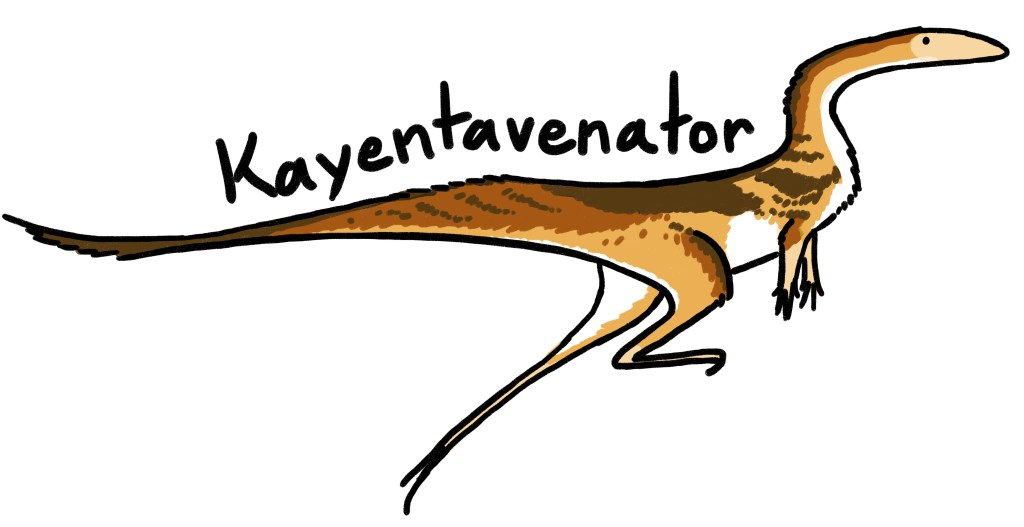
When to find me: The Early Jurassic period, about 196 million years ago.
My favorite food: Meat! I’m a carnivore.
My neighborhood: The Kayenta formation used to be a tropical floodplain, a bit like African savannah today- but no grass or flowers. Ferns cover the open plains, dotted with islands of spiky cycad groves. Rivers crisscross the land with lush tree ferns, ginkgo trees, and conifers. Every year during the wet season the plains turn into a flooded marsh, but the hottest months bring no rain, and the rivers shrink until the plains are almost as dry as the great desert that lies to the north.
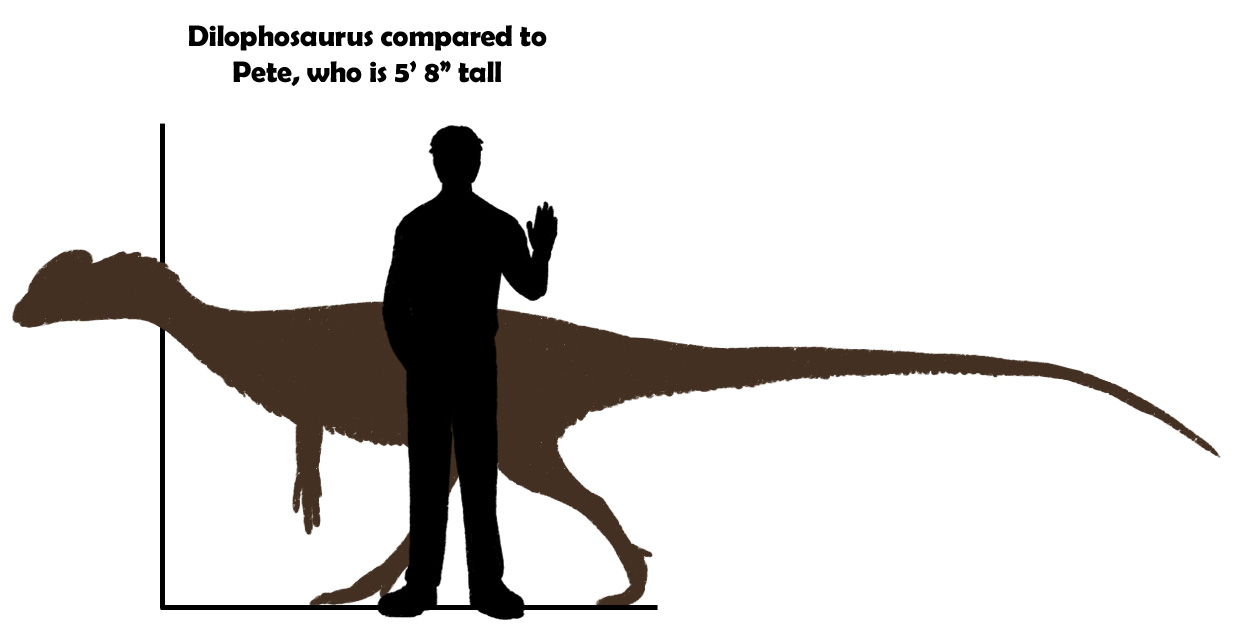
A few of my neighbors: Sarahsaurus (an early sauropod) is a tough neighbor. We don’t talk much. But if I’m lucky, little Scutellosaurus (small armored dinosaur) might join me for lunch. Dilophosaurus is the biggest carnivore around, but Coelophysis (smaller meat-eater) is happy to take a few leftovers or join me on a quick chase after frogs, turtles, or a crocodile cousin or two. They like to stay close to the rivers. A long-tailed pterosaur patrols the skies for insects like beetles, dragonflies, an ancient cousin of the moth, and something called a snakefly.
Fun Facts:
Paleontologists don’t really know how big I could grow, because the only fossils found are of a juvenile, with a lot of growing left to do!
There’s been a bit of discussion back and forth about what family I should be in. I was first described as a Tetanuran, which is a group that includes dinosaurs like Tyrannosaurus rex, Allosaurus, Ornithomimus, and even birds, just to name a few. Others suggested I was related to the local Coelophysis k. or possibly a young Dilophosaurus, but the Dilophosaurus idea was quickly ruled out since other fossils of young Dilophosaurus have been found, and mine don’t look exactly like them. All in all there are not very many bones to go on, and it can be difficult to figure out where the puzzle pieces go when they are broken and squashed with time!
A lot of dinosaurs are named after the place they’re found, like me! Kayenta + venator (latin for hunter). Hunter of the Kayenta Formation.
Fossil Finds:
Only one partial, juvenile skeleton with part of the pelvis, some vertebrae, and pieces of hind legs.
Resources:
Gay, Robert. 2010. “Kayentavenator elysiae“, a new tetanuran from the early Jurassic of Arizona” In: Notes on Early Mesozoic Theropods. Lulu Press. p. 27-43. ISBN978-0-557-46616-0
Where I live: Arizona in the U.S.A.- The Kayenta formation
When to find me: The Early Jurassic period, about 196 million years ago.
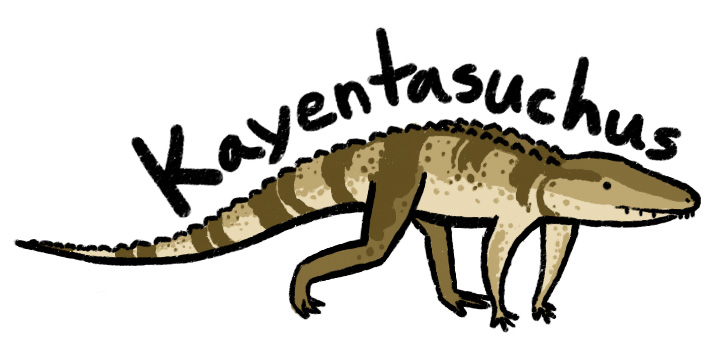
My favorite food: Small animals, fish, or the occasional large insect. I’m a carnivore.
My neighborhood: The Kayenta formation used to be a tropical floodplain, a bit like African savannah today- but no grass or flowers. Ferns cover the open plains, dotted with islands of spiky cycad groves. Rivers crisscross the land with lush tree ferns, ginkgo trees, and conifers. Every year during the wet season the plains turn into a flooded marsh, but the hottest months bring no rain, and the rivers shrink until the plains are almost as dry as the great desert that lies to the north.
A few of my neighbors: I’m surrounded by big and scary dinosaurs like Dilophosaurus, Coelophysis, and Kayentavenator, so I stay out of their way. Giant Sarahsaurus (an early sauropod) and little Scutellosaurus (small armored dinosaur) are local plant eaters. Frogs, turtles, and fellow crocodile cousins stay by the river, but I don’t hang out there much. I may be related to crocs, but I like dry land better. I’ll often see a long-tailed pterosaur flying overhead for insects like beetles, dragonflies, an ancient cousin of the moth, and something called a snakefly.
Fun Facts:
I might look a skinny crocodile, but I’m not a crocodile at all! I’m a crocodile-ish relative called a Sphenosuchian (Ss-fee-no-soo-key-an).
My name comes from the place they found me, the Kayenta Formation + suchus (latin for crocodile). Suchus is a common word in the names of prehistoric crocs and croc-ish things, and comes from the word Soukhos, the ancient Greek form of the name Sobek, the Ancient Egyptian god that has the head of a crocodile. My species name, walkeri, is in memory of Alick Walker, a well known paleontologist.
Go ahead and put your hand up against the screen, it should be life size!
Fossil Finds: A nearly complete but fragmentary skeleton, including an incomplete skull with articulated jaw hinge (mandibular rami), articulated torso, articulated right leg, and a few other postcranial bones. Articulated means the bones fit where they should be, instead of scattered everywhere. Postcranial bones are all the bones behind the head.
Resources:
James M. Clark, Hans-Dieter Sues, Two new basal crocodylomorph archosaurs from the Lower Jurassic and the monophyly of the Sphenosuchia, Zoological Journal of the Linnean Society, Volume 136, Issue 1, September 2002, Pages 77–95, https://doi.org/10.1046/j.1096-3642.2002.00026.x
Where I live: Arizona in the U.S.A.- The Kayenta formation
When to find me: The Early Jurassic period, about 196 million years ago.
My favorite food: Meat! I’m a carnivore.
During the dry season only the toughest cycads stay green
During the wet season ferns and horsetails come to life
My neighborhood: The Kayenta formation used to be a tropical floodplain, a bit like African savannah today- but no grass or flowers. Ferns cover the open plains, dotted with islands of spiky cycad groves. Rivers crisscross the land with lush tree ferns, ginkgo trees, and conifers. Every year during the wet season the plains turn into a flooded marsh, but the hottest months bring no rain, and the rivers shrink until the plains are almost as dry as the great desert that lies to the north.
A few of my neighbors: Sarahsaurus (an early sauropod) and Scelidosaurus (armored dinosaur) are some tough neighbors. We don’t talk much. But if I’m lucky, little Scutellosaurus (small armored dinosaur) might join me for lunch. Coelophysis (smaller meat-eater) scurry around everywhere and are happy to take a few leftovers, or join me on a quick chase after frogs, turtles, or a crocodile cousin or two. They like to stay close to the rivers. A long-tailed pterosaur patrols the skies for insects like beetles, dragonflies, an ancient cousin of the moth, and something called a snakefly.
Meet Chum. He would love to go for a swim with you, especially if you have any treats! 🙂
The shark cruised the turquoise water, sunlight rippling through the waves to the soft sand below. A small school of silvery fish stirred up a cloud in the warm, shallow waters by the reef, but the shark turned away from them.
Meet Tango. This bird likes to party, and loves being the center of attention even more!
Archaeopteryx has been a known fossil for quite some time. Ever since that famous feather discovered in German limestone in 1860, and then the first skeleton in 1861.
Oops! Looks like our featured critter has flown the coop! I’m terribly sorry for the delay, but Pete’s on it and will bring him back as soon as possible. 🙂
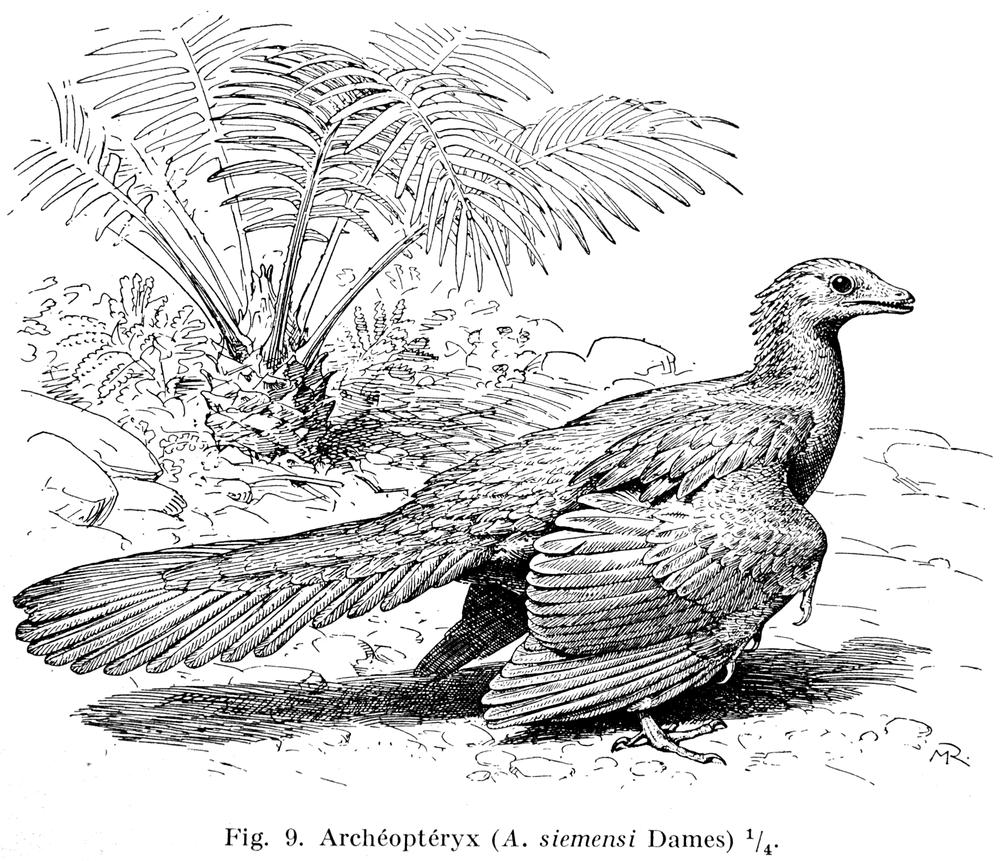
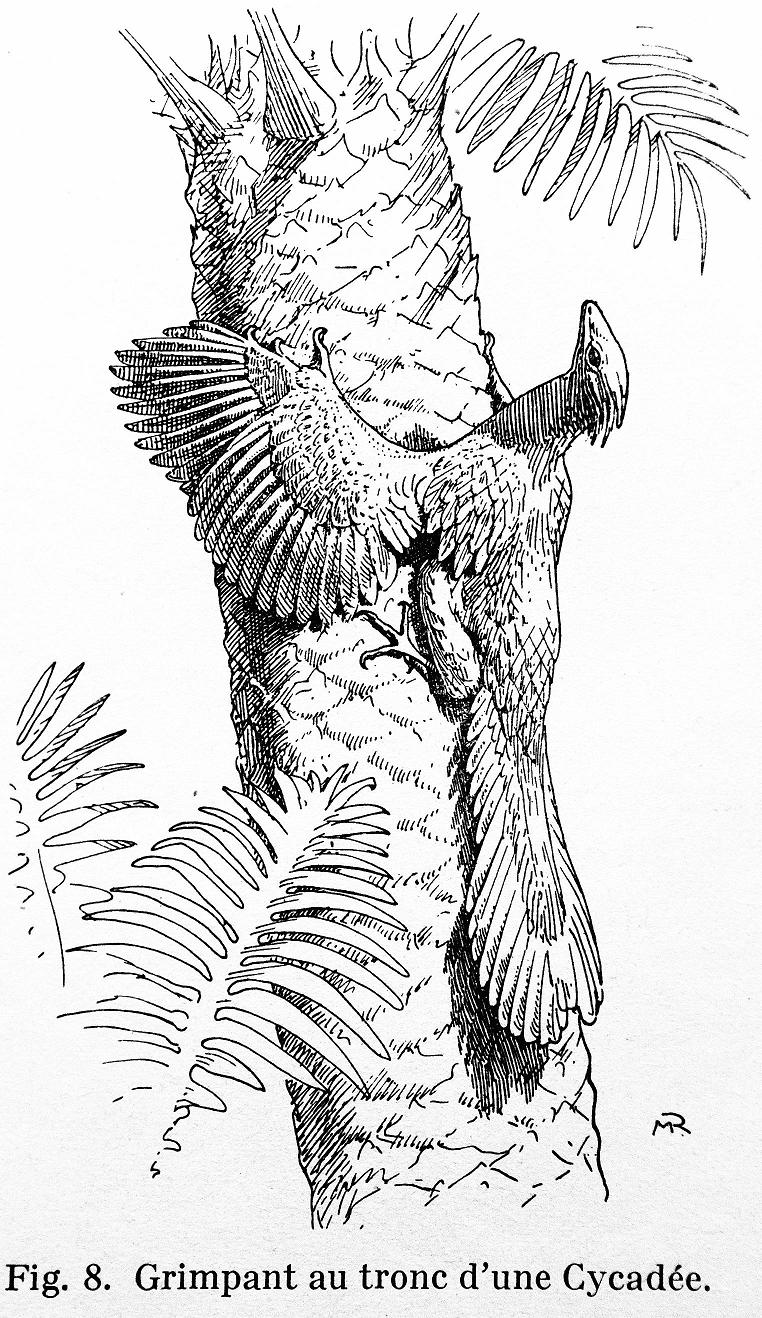
While you wait, I found a few lovely old drawings and paintings of our feathered friend. And by old, I mean a part of history. In 1941 Manfred Reichel, a Swiss paleontologist, published an article on Archaeopteryx. I love how natural and lifelike his drawings are, unlike the chimeric feathered-lizard monstrosities most people have drawn for ages.
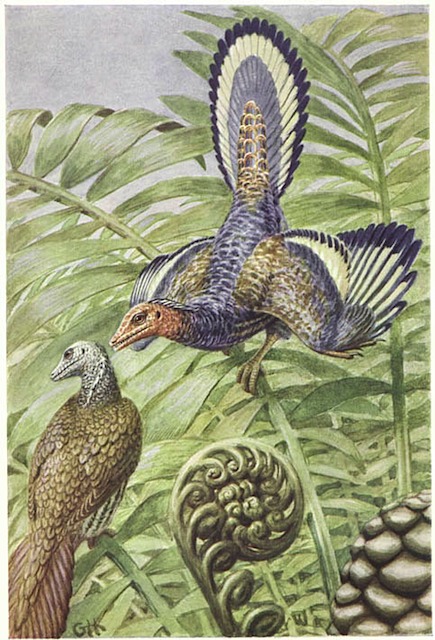
Manfred Reichel took some inspiration from reading The Origin of Birds, written by Gerhard Hellmann and published in 1926. Below is one of Hellmann’s beautiful paintings.
Come back soon! Hopefully it won’t take more than a day or two to catch our feisty dancer. 😀
Meet Flipper. He’s a happy-go-lucky guy who’s only ambition in life is to cruise the water for a bite of squid. He loves to greet new friends with a friendly splash.







 Pete's Paleo Petshop