Meet Rosie. She’s a bit shy, and might need a little encouragement to come closer. A few treats should do the trick. Before you know it she’ll be perfectly content to snuggle close and put her head on your lap. 🙂
Rosie is smaller than your average dinosaur, about the size of a deer. Like a deer, she can be a bit jumpy, and she feels much better if she has friends to keep her company and watch out for troublesome, over-exuberant types like Opie. He’s far too excitable, and that makes her nervous. She’d much rather curl up under the shade of spiky cycad fronds for a little siesta.
Much safer there. And Rosie always wins at hide-and-seek. 😉
If you take the time to give her treats and coax her out of the thicket, then she’ll get to know you rather quickly. Then she’ll be your friend forever, and come running when you call. 🙂 I hope you don’t mind having a second shadow…
Making progress…
I’m working on something super top-secret at the moment. Well, not really super top-secret, since I told my family about it- but anyway, I want to mention it here too.
Since it may be a while before the picture book is finished, I want to work on a smaller, short term project so that you have something sooner.
In short, I want to create a collection of shortstories, mini-comics, illustrations, what-have-you. My question is about what topic to cover…
Pete’s adventures around the shop- Like the time Terry and her flock nabbed his lunch.
Feeding time at the shop- Walk with Pete as he shows us how he feeds Tigger at the lake, or takes care of Elmer’s stubbed toe.
Letters to Pete- Frustrated paleo pet owners send letters to Pete with their questions. What do you do when Big Al keeps tearing up the furniture?
Critter cam- So what do dinosaurs do when you’re not looking? Find out what happens if you give Dippy a giant ball.
The Paleo Pet handbook- a small book with all the basics of the care and feeding of your paleo pets.
Please let me know what looks the most interesting in the comments! Thank you for sharing a little of your time with me here on the site, you guys are awesome, and I want to do whatever I can to make your stay better than great. 🙂
Coming Next Week…
Food is the first (and just about only) thing in mind for this gentle giant. 🙂
So there’s a long and a short way to go about this. I do something really tedious and boring, and pull out the scientific papers, fossils, diagrams, anatomy jargon, and articles written by people much smarter and more knowledgeable than me in all things paleontology…
OR
I can save you the big snore (because the technical stuff is tough to read, and I like this sort of thing!) and have an excuse to draw yet more cute critters, while sneaking in a few quick fossil facts in a bite-size post or convenient picture. 🙂
Why am I doing this?
The truth is that I got a little frustrated. All the dinosaur books for kids fall into one of two categories-
Super cute story and dinosaurs, but no science. For example, “Pteradactyls” lumped in with the dinosaurs, and dinos stuck with the appearance of rubber toys from the 80s.
OR
“Educational”, but tough to read. Because after reading a list of names like Tyrannosaurus rex, Euplocephalosaurus, and Parasaurolophus 20 nights in a row, I know that book is going to put aside for “some other time”. Plus the computer graphics always look a bit unpleasant to me.
Pete’s Paleo Petshop is the best of both worlds. A cute story with illustrations based on the latest scientific research I can find. But I also want to make clear what part of the illustration is something we actually know as fact, or really just an educated guess. Speculation. A hypothesis. 🙂
So this is the start of a new series called The Art & Science of Pete’s Paleo Petshop. That’s super long though, so I’ll have to shorten it somehow. 🙂
For your convenience, I’ll keep a list of all posts in the series here on this page, and I’ll update the list with links as we go along. I’ll begin with the main cast, and we’ll see where we go from there. 🙂
Bonus Question: Any special requests? I’ll be going over these critters in no particular order, so if there’s one you really want to see first, let me know. First one to answer in the comments gets first pick! 🙂
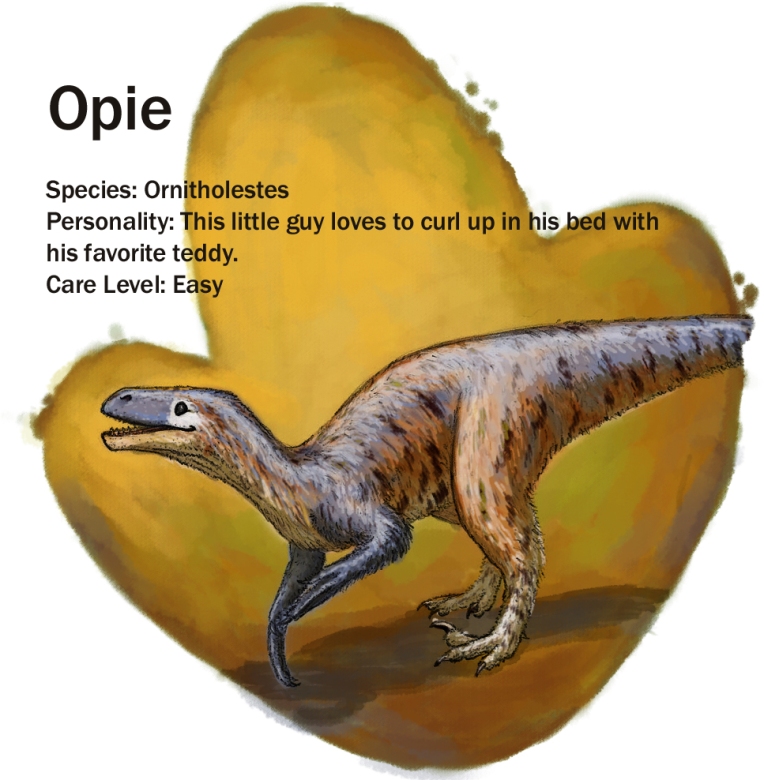
Meet Opie. He’s a happy little fella who loves to curl up in your lap, so it’s a good thing he’s about the size of a big dog!
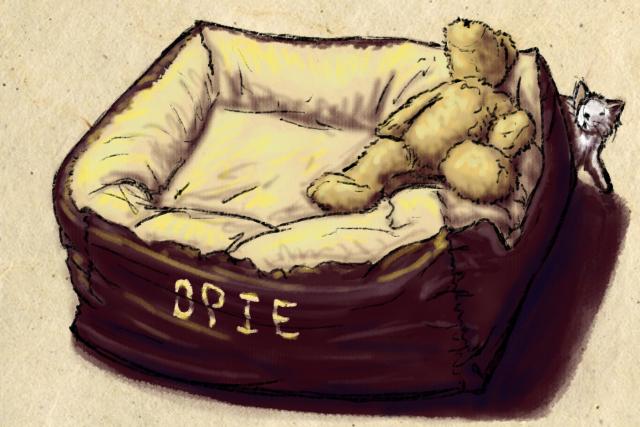
Yes, Opie seems to think he’s a big lapdog, and he loves it when you stroke his feathers. Where is he off to now? It looks like he’s going to show you his favorite toy…Opie carries Teddy around everywhere. He’s gone through quite a few “surgeries” to poke the stuffing back in after Opie nibbled on him.
Oh! That’s Miss Kitty peaking around the corner. She’s a little shy after Opie tried playing a game of snatch with her. He’s just a big softie though, and he only wants to play. He’ll get a little droopy when Miss Kitty doesn’t understand. So he’ll curl up in his bed to snuggle with Teddy, and he’ll chirp happy chirps when he snuggles. He sounds a lot like this…
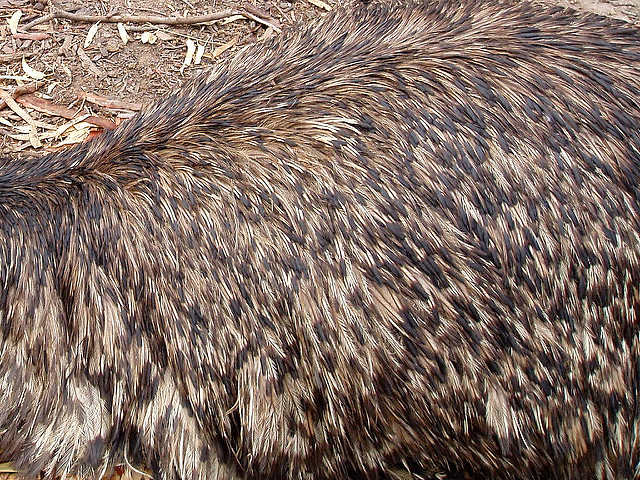
Speaking of soft and cuddly, those feathers are rather like those on an emu or kiwi. Looks a lot like fur, doesn’t it? 🙂
Emu feathers. Photo courtesy of Amanda Slater (2009)
Making progress…
My biggest discovery this week is Pinterest! Not a lot to do or say about it just yet, since I’m just in the learning phase…but let’s just say that for a website heavy on illustrations like this one, it sounds like an image-centric site like Pinterest will be a great way to spread the love. 😀
Coming Next Week…
This small plant-eater is a bit shy, but she’ll snuggle for treats. 🙂
Let’s revisit our friend Mr. B from the first post of this series on fossilization (Who’s Mr. B? Refresh your memory here). We’ve dug up his bones, put them together, figured out all the soft stuff like muscle and skin, and we’ve got a pretty good idea how he lived…but he didn’t live all by himself on a desert island, or on a blank white sheet of paper (ahem, I’m looking at you, boring sideways diagrams).
So how do we figure out about the big picture? Where does Mr. B fit in?
First let’s take a look at old Mr. B…what do we know about him?
We know he’s a Brachiosaurus.
We found it in Colorado while digging at the Morrison Formation.
He’s a very large mega-herbivore, and rare in this particular formation.
This isn’t a lot to go on, aside from the fact that Mr. B would need plenty of plants to eat and water to drink, and lots of space to roam.
Who’s in the neighborhood? It would be tough to figure out what makes a Savannah with only a giraffe to look at, so let’s take a look at some of Mr. B’s neighbors.
There were also all sorts of other non-dino critters, like flying pterosaurs, several small land and water-loving crocs, all sorts of insects (including termites that built 90ft-tall mounds), fish, frogs, turtles, lizards, crayfish, clams, and even a few egg-laying mammals no bigger than rats.
Now we’re getting somewhere. We know that this environment has to support several very large herbivores and carnivores, along with a very diverse population of smaller dinosaurs and other animals. We’ll have to assume that many small and delicate animals were not preserved.
What we can’t really figure out from looking at all these animals is…what where all those giant plant eaters eating?
The Green Stuff. Of course, plants are essential to any ecosystem, and in the Morrison Formation we find stuff kinda like this…
Conifers:
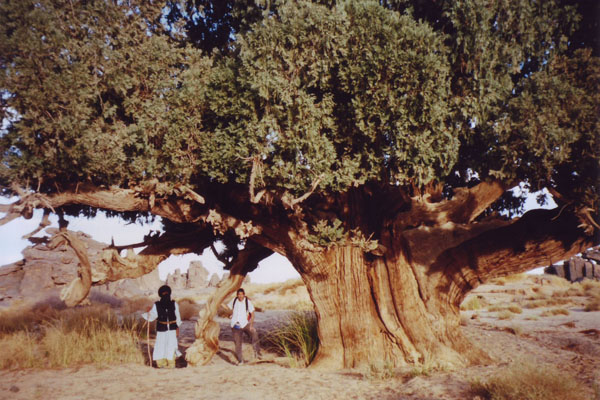
A giant cypress tree in the Tassili n’Ajjer National Park, at the edge of the Saharan desert. Image courtesy of archmillenium.net
A conifer tree, probably a type of juniper.
Ponderosa pine trees. These are in the middle of the desert in the southwestern states of the US.
A pinyon pine. Pine nuts would be a tasty treat for any dino I’m sure. 🙂 Images courtesy of in-the-desert.com
Ginkgoes:
A reconstruction of a Jurassic ginkgo branch. Image courtesy of Wang Chen
A modern day Ginkgo biloba tree. Wikipedia commons.
Tree Ferns:
Doesn’t it make you feel like you’ve stepped into a time machine? These tree ferns are at the Whirinaki Forest Park in New Zealand. New Zealand is just plain awesome, they should’ve stuck a couple of these in Jurassic Park…image courtesy of fotoditzi (2007)
These cycads are grown in a garden, but wild cycads tend to grow in large thickets. They depend on being close to each to reproduce.
There are many more varied shapes to cycads. these are just the most drought tolerant, but all cycads tend to do well in places that are hot and dry like Arizona.
Others prefer wetter climates. Click “cycads” above to see more varieties in this person’s garden. Images courtesy of troydonovan, on growingontheedge.net
Photo courtesy of Maurice Levin (2011)
Horsetails can live just about anywhere so long as there’s a river- even deserts.
These horsetails were photographed in the Chihuahuan Desert Gardens, Centennial Museum. Images courtesy of A. H. Harris
These images are courtesy of Aneyefortexas.wordpress.com
Some ferns don’t even look like ferns!
This one looks dead, but will freshen up into a lovely green again as soon as the rains come. You can see more beautiful pictures like these by clicking the link to desert ferns above. Images courtesy of Aneyefortexas.wordpress.com
Dirt isn’t just dirt. Sand, mud, ash, sediment at the bottom of the ocean or a lake…they all turn into different kinds of rock. So what kind of rock a fossil is buried in can tell us a lot about plants, which can then tell us a lot about the local weather.
The Morrison Formation is made of layers of mudstone, sandstone, siltstone and limestone, and is light grey, greenish gray, or red in color. Most of the fossils occur in the green siltstone beds and lower sandstones.
To translate into plain English, this means that the area was an area laced with a few rivers, and had seasons of drought and flood. Since the area was relatively flat, it would flood and turn into swamp in the wet season, but have dry Savannah during the dry season.
But there was no grass or flowering plants in the Jurassic, so what sort of plants would there be in a Mesozoic Savannah?
A typical Savannah in the present day.
Take a look at modern ecosystems. In areas that have no grass or flowering plants, what is the primary groundcover?
Let’s take another look at those desert ferns…
Dead looking and dry during the long months of drought, but give it a little water and it transforms. The grassy-looking brown fern further up does the same thing. Dead and brown when it’s dry, lush and green when it rains.
Biological what? (my thoughts when I first read that)
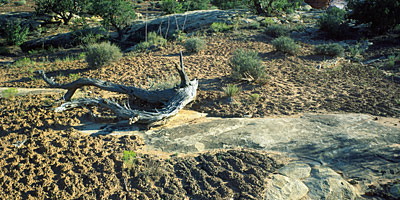
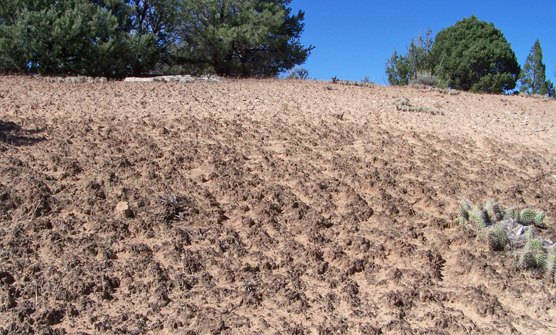
Biological soil crust, or cryptobiotic soil, is a community of bacteria, moss, and lichen that holds moisture, prevents erosion, and provides valuable nutrients for plants (and possibly dinos 😀 ). It looks all brown and crusty during the dry season, but like the ferns, turns green when it rains.
What looks like rocky soil are actually living communities of bacteria, lichens, mosses, and algae. Photo courtesy of NPS.gov
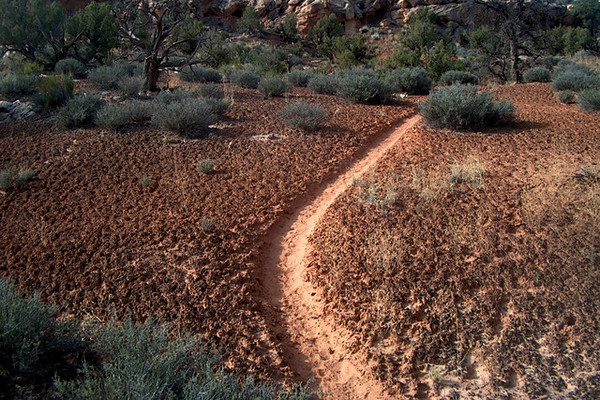
One last picture, and here we have something that is probably very similar to what the Jurassic Morrison habitat was like. Only instead of the flowering shrubs we see here, imagine many different shapes of cycad and bushy areas of dried out ferns waiting for rain…closer to the river we get horsetails, ginkgoes, and giant, more water-loving ferns and tree ferns.
The padded feet of dinosaurs, like camels, kangaroos, and ostriches today, doesn’t break the slow-growing crust underfoot.
That trail you see cutting through the crust shows us how thick the living layer can be. The trail is the result of a mountain bike or something cutting through it, which will take hundreds of years to grow back.
Quick Question: Now that we have a more complete picture, how do you think Mr. B fits in now? My guess is as good as yours, so it’s all fun speculation. I’d love to here your answer in the comments! 🙂
Now we’ve put all the pieces together and figured out what they mean (sort of). We’ve done our best to cloth the muscle and bone with fatty tissue, skin, and maybe even feathers. Now we can really get wild.
But surely there’s no way to have any clues on behavior? It’s all just guesswork right?
Well no, fossils can leave behind clues even for how an animal lived. Here are a few ways we can speculate (or make an educated guess based on fossil evidence) how wild these critters could get. 🙂
Bones & Teeth
Teeth can tell us a lot about what an animal ate, and the rest of the skeleton can give clues as to how it ate. For example: the slender, notched jaw of Dilophosaurus suggests that it usually ate fast, slippery prey.
Image courtesy of Jaime A. Headden (2011). Check out his blog to see more beautiful diagrams & illustrations, or if you want to look up more detailed info on all things paleontology. 🙂 Qilong.wordpress.com
It’s not fool proof though, just look at pandas and fruit bats.
A replica of a fruit bat skull, also known as the flying fox. Image courtesy of skullsunlimited.com
Just look at those chompers! Image not mine, so if you know who to credit please let me know.
Sometimes an animal that looks specialized in one thing is just specialized to survive during hard times. Example: seals that have teeth “specialized” for eating krill don’t only eat krill. They eat everything they can get their teeth on, with the added bonus of pigging out on krill when they can, just because they can.
Articulated Skeletons
Sometimes animals are buried suddenly and quickly. In especially rare cases, these complete skeletons preserve “candid shots”, moments frozen in time by a collapsing sand dune, mudslide, or drifting down into a deep, cold lake.
Click on the pictures for more info. 🙂
Citipati fossil on eggs. Photo courtesy of Nature (December 1995)
Reconstruction of Citipati by Apsaravis.deviantart.com
Reconstructed Citipati fossil. Credit unknown, so please let me know
Velociraptor vs. Protoceratops (sheep-sized cousin of Triceratops)
I couldn’t find who to properly credit for these images, so please let me know. Thank you.
Track Ways
Photo courtesy of R. T. Bird
There are many more tracks than bones, and they offer a unique look at prehistoric animals in action. Here are a few things we can learn from tracks…
How they moved
How fast they moved
How different animals interact (like traveling herds, or pursuit of prey)
Swimming pterosaurs! There are many tracks of the flying critters swimming. Interestingly enough, the tracks only have back paw prints.
Image courtesy of Witton 2013
Other Trace Fossils
Wikipedia commons
Fossil dino poo is even better at telling us what a dino ate than its teeth. The only problem is figuring out who it came from (unless you have a fossil of an animal mid-poop!)
This little Pterosaur drifted to the bottom of a very deep lake. If you follow the spine with your eyes to just below the blobby rib cage at the base of the tail, there’s a tiny shadow that looks like a cucumber shape. This critter was fossilized mid potty-break. Image courtesy of the Royal Tyrrell Museum of Palaeontology.Here’s a closer image. The little arrows labeled cp are pointing to the coprolite, or fossil poo. 🙂 Image courtesy of Hone et al. (2015)
Dino burrows give great insight into the social nesting behavior of some dinos.
Nests, teeth marks on bones, and dino bottom prints (true story) are all great clues left behind by living prehistoric animals. Put together, they offer a glimpse into the animal’s story.
Modern Family
Since crocs are living relatives of dinosaurs, and birds are dinosaurs, then they are a great place to look for clues. Take a closer look, and we may get a glimpse of exactly how strange, beautiful, and wonderful dinosaurs could be.
The croc family may look tough and mean, but here are a couple of normal behaviors that show how gentle and social they can be.
Here are a few funky bird dances. Bright colors not required. 😉
Quick Question: Which was your favorite dancing bird? How do you think looking at modern animals like these can inspire our vision of prehistoric animals? I’d love to hear from you in the comments! 🙂
Meet Elmer. He’s a little shy, and likes staying in his comfort zone, but he’ll be your best giant friend if you give him some greens and a big hug.
The best way to a dino’s heart is through his stomach, as they say. Well, that’s not really the phrase, but I’m sure it’s just as true, especially when it comes to these long-necked sauropods. 🙂 I think the rough estimate is a solid cube- 5ft x 5ft – of vegetation in a single day to feed one of these guys.
Speaking of feeding longnecks…it reminds me of that scene in Jurassic Park. The one where Dr. Grant and the kids are enjoying a few moments not running away from hungry Rexy, and they get a chance to pat the brachiosaurus (totally my inspiration for paleo pets, by the way).
If you’ve ever watched Jurassic Park, you may notice that Elmer’s head looks a little strange…that’s because the longneck in Jurassic Park is an African cousin of this guy (and until recently the critter with more complete fossils). There’s a few differences between the two even a novice dino enthusiast like me can easily recognize…
Completely different head. The African cousin (Giraffatitan) has a head like the one in Jurassic Park. The American Brachiosaurus (Elmer here) has a much gentler slope to his forehead, and longer snout.
Body shape is different. The African Giraffatitan has a shorter torso and overall more stocky build. While Elmer the Brachiosaurus has a longer body, and generally is a bit more slender. Not skinny, just not as stocky as his African cousin.
They live on entirely different continents. The Atlantic ocean was already forming in the Jurassic period, so Brachiosaurus and Giraffatitan were separated by a lot of water. 🙂 That leads to the same sort of thing that makes a mountain lion (cougar, puma, etc…) in the Americas different from a lion in Africa.
Also on the subject of greenery, I tried experimenting with something different this time. All these critter profiles are an experiment in style really, as I practice how I want to illustrate the pictures in the book.
This time I really focused on making my shadows dark and my highlights light. It sounds obvious and hard to mess up, I know, but you’d be surprised how hard it is! Especially working with color, it gets really easy to let the color do all the work, and not see how dull and gray everything is. So I changed the whole picture to grayscale, so I could see how it looked in black, white, and gray tones.
It all looked about the same shade of gray. Not good. I like it much better now after I added more light and shadow. 🙂 So I’ll do that test from now on.
Another experiment is the vague hint of background. I don’t generally paint backgrounds, so this is me dipping my toes in the river to see how cold the water is. I like to ease my way into things. Baby steps. 😀
Do you like the profile pictures better this way, or are they better with simple painted color? Let me know in the comments! 🙂
Making progress…
I’m having fun experimenting with new artsy techniques. As an artist, it’s always a joy and a challenge to improve my work. Plus it’s an important bonus that I can give you something better and better each time you stop by. 🙂
On a related sidenote, I think I’m getting into the swing of these little profile pictures. I think I’m getting a little faster at it, or at least not as many starts-&-stops as before. 🙂
Coming Next Week…
Look up to see this critter, before he nabs that sandwich out of your hand! 🙂
Now here’s where things get a little muddy. Bones are easy. They’re hard, relatively common, and all bones that look about the same are going to have similar functions. Back-boned critters all kinda have the same basic pattern. Same with muscle. The only squishy thing with muscle is determining how much is where, then you can figure out the basic shape on top of the bones.
But what about skin? We’re pretty good at figuring out how a dinosaur works on the inside, but what did they look like on the outside?
Here is where a little mud or volcanic ash comes in handy.
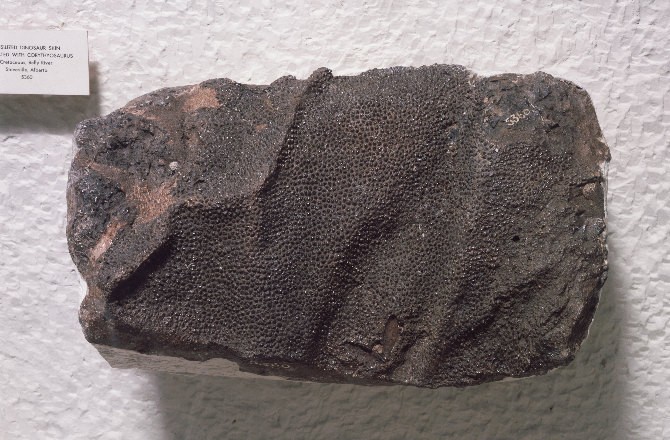
When an animal is buried in soft, fine-grained sediment, then the critter’s skin, scales, fur, or feathers leave an impression. Just like stamping into soft clay. With more refined techniques in recovering fossils in the field (or prepping them at the museum), paleontologists are finding more “skin stamps” than ever before.
Corythosaurus casuarius skeleton, by Barnum Brown, 1916.
A hadrosaur mummy. Keep in mind that the animal was most likely dead and already decomposing when it was buried. We can’t know for sure if it had more fat under the skin than showed here or not. Notice how thick and muscular the tail base is. 🙂
Photo not mine. If you know who needs credit, please let me know. 🙂
Corythosaurus skin.
Bell, 2012
More hadrosaur skin impressions. The impressions that look like a honeycomb are actually impressions of what’s underneath the bumps. Reminds me of bubble wrap. 😛
Photo courtesy of Black Hills Institute of Geological Research
Triceratops skin impression. No one knows if those larger osteoderms would look just as they do here, or if larger quills or spikes where attached. Speaking of quills…
wikipedia commons
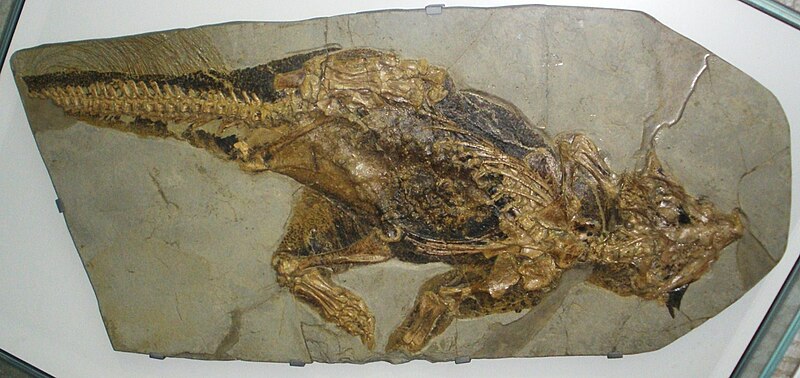
A beautiful fossil of Psittacosaurus (distant, small cousin of Triceratops) at the Senckenberg Museum of Frankfurt. We can’t be sure about color, but you can see the pattern of darker and lighter scales. Notice how much muscle this critter has, and those quills! A one-of-a-kind find. Remember my post a couple weeks back about how hard it is for an animal to be fossilized? How much more amazing that we have something like this?
Here’s a closer look at those quills…
high resolution images of Psittacosaurus tail quills, from the paper studying the specimen
The general consensus is that these quills are a feather-like integument. Here’s what we don’t know…
If all species of Psittacosaurus had them (there’s 18, all very different from each other), and if they did, how much & where.
If any other ceratopsians had them. Psittacosaurus was part of a line that died out, so it’s rather unlikely that Triceratops & co. had them.
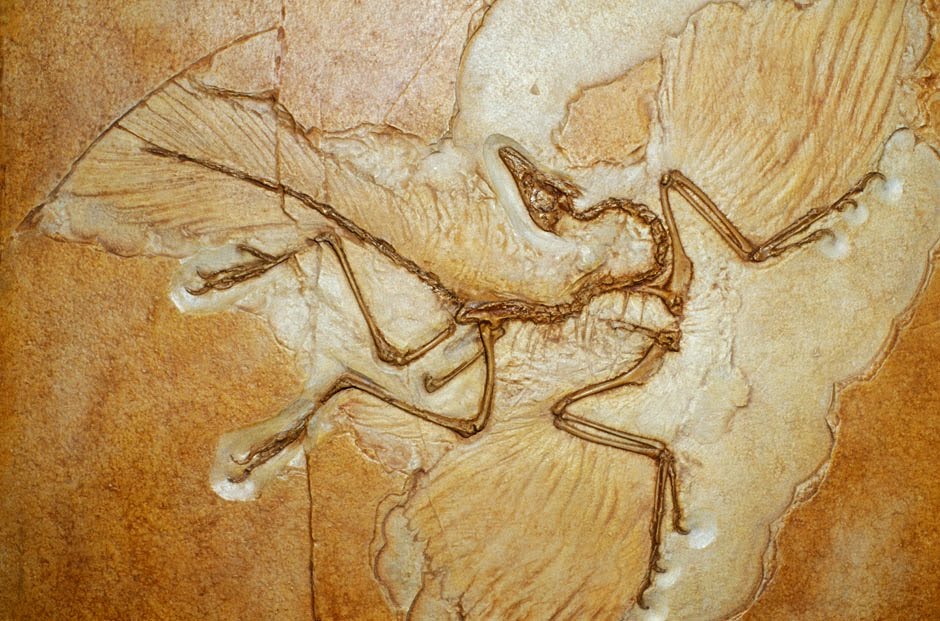
Now that we’re on the subject of feathers…just look at this exquisite fossil of archaeopteryx. 🙂 It never gets old…takes my breath away every time I see it.
Photo not mine. If you know who needs credit, please let me know. 🙂
Archaeopteryx used to be famous for being the “first bird”, now we know that just about every smallish dinosaur (and even some big ones) where wearing similar outfits. Yes, most carnivorous dinosaurs are known to have feathers, it’s just a question of what kind, and how much. 🙂
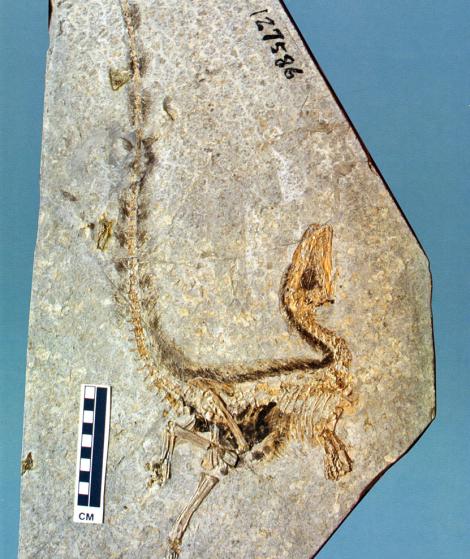
Photo courtesy of Institute of Fossil Paleontology and Paleoanthropology, Beijing
I know that looks like fur, but those are fluffy feathers all over this little sinosauropteryx. Notice the bands of light and dark color on its tail.
Here are some more birdy feathers on a larger dinosaur.
This is Zhenyu- Zhenya- Zen- Oh forget it. Let’s just say she’s a cousin of those infamous raptors from Jurassic Park. She’s about five feet long, so closer to the real turkey-sized Velociraptor. Fully feathered. Just look at those glorious wings!
Photo courtesy of Stephen Brusatte
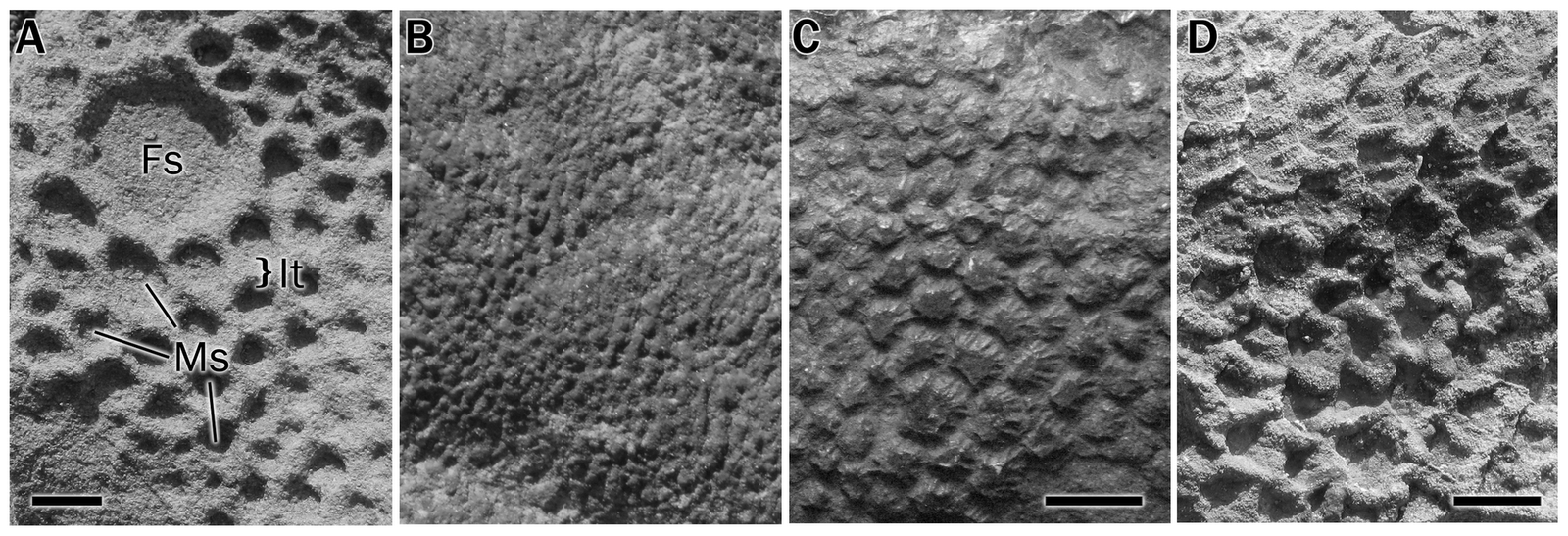
Here’s a close up of those feathers. Notice the full wing in photo D below. You can clearly see primary, secondary, and covert feathers, just like what you’d see on a modern bird wing.
But wait, it gets better. 😀
Not quite as pretty, but look at figures A, B, and C below. The bumps that those arrows are pointing to are called quill knobs, and figure D shows us what that means. 😀
Keep in mind that this fossil came from a critter called Dakotaraptor. This guy was every bit as big as the ones in Jurassic Park. And it has wings.
Image from paper studying Dakotaraptor.
A prettier reconstruction of Dakotaraptor’s wing.
Photo courtesy to Robert DePalma.
These and other fossils from even larger dinosaurs such as yutyrannus (T-rex’s Chinese cousin) that also preserve feathers, can give us clues for exactly how diverse and widespread feathers are in the dinosaur family tree.
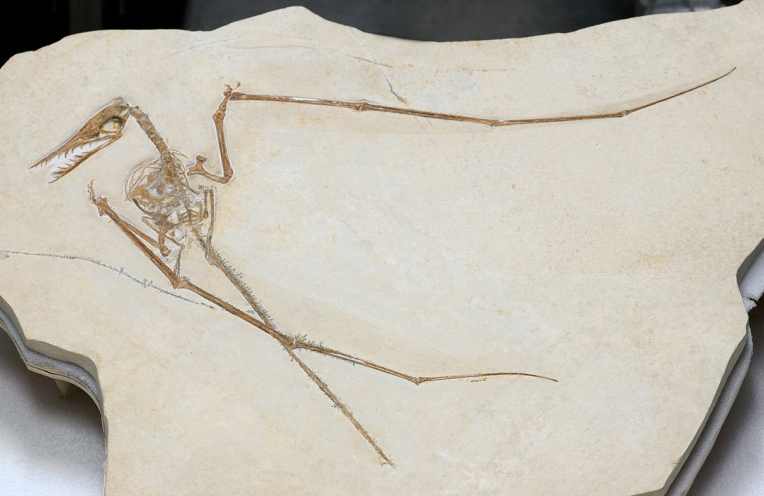
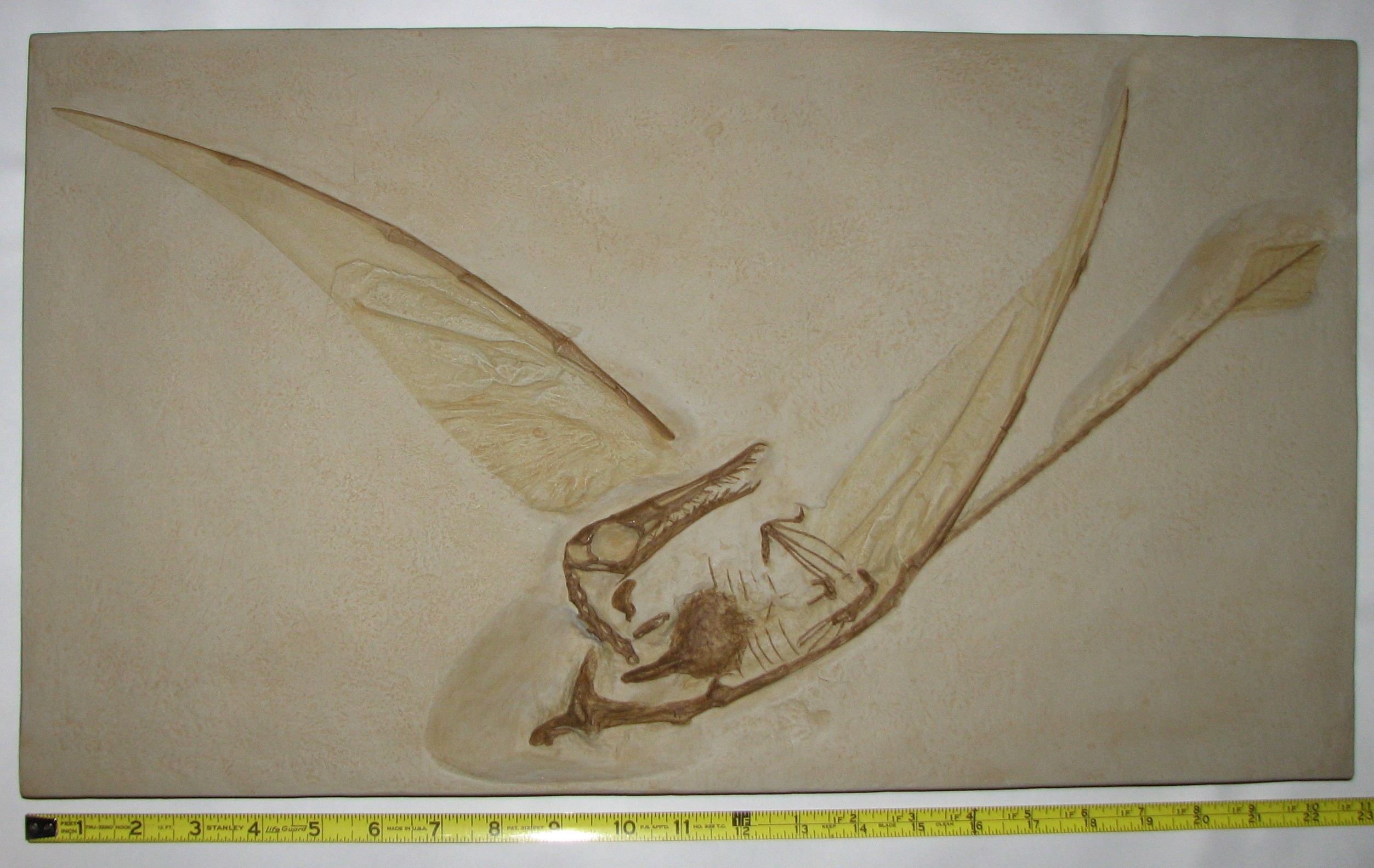
The flying reptiles called pterosaurs, for example.
Picture not mine, if you know who needs credit, please let me know.
With fossils like these we can learn about the structure of the wing, and that these animals also had a fur-like coat of feathery fuzz covering their bodies. No scaly or naked skin here.
So there is a lot we do know, but still so much left in the dark. With bones, muscles, and a few hints of soft tissue, next time we’ll be heading off into uncharted waters.
Quick Question: These fossils are all amazing, but there is still so much we don’t know. Take a quick look at the lion and tiger above, and then look at the skulls below. Can you tell which one is which? Leave your answer in the comments, I’d love to hear from you! 🙂
These are replicas from skullsunlimited.com, but they get the point across 🙂
Meet Copper & Daisy. These gentle giants are always happy to meet new friends. They love being part of the group.
Copper is a strapping young bull, and never leaves the side of his lovely lady. He’s very much the gentleman with her, and any friend who joins the herd. Just keep a close eye on your pockets if you have treats!
You can’t hear him, since it’s a picture of course, but Copper is chirping to Daisy. He’s found a good patch of something tasty, and he’s telling her to follow him. Many dinos could probably make a lot of noise without ever opening their mouths, like the gurgly hum Copper is making here. But you can see his lovely red throat all blown up like a bullfrog. 🙂
I imagine him sounding a lot like this…
Making progress…
I’ve got a tiny buffer going, yay! It’s taking a little more determination and stick-to-it-iveness (I’m sure I’ve heard that term used before) than I’m used to, but you’ll be seeing this post a week after I write it. 😀
You have to celebrate the tiny wins as much as the big ones, y’know. 🙂
Baby steps will still get you up the stairs. It just takes a lot of concentration, looking back to see how far you’ve come, and looking up to the top to keep moving forward.
A little lesson I learned from watching my little Sammysaurus crawl up the steps, learn to walk, and all the many challenges of being one year old. 🙂
And why is a buffer good for you? It means I can focus more time on the actual book! As a full-time mom, I have to manage my time carefully, so any way I can help streamline the blog here makes sure I have time for the book. 🙂
Coming Next Week…
A shy giant who just wants some greens and a big hug. 🙂
They say the dead tell no tales…Obviously whoever coined that phrase never studied the bones of prehistoric animals, because the fossils of dead critters sure say a lot. Dry bones all kinda look the same, but take a closer look and you can see the clues left behind.
Unless it’s something totally new, most dinosaurs don’t have as much guesswork as I implied in my post.
Take Allosaurus, for example. Tons of bones, from many different animals, gives us a good overall picture of the species and its growth cycle. So for many dinosaurs, the difference from one skeleton to another is pretty small for the average enthusiast like myself. And honestly, the skeletons of lions and tigers are almost identical. We wouldn’t have a clue how obviously different they are without everything on top of the bones.
But I’m getting ahead of myself now. We’ll come back to the lion and tiger example next Monday. 🙂
So what can bones tell us about an animal?
A skull can tell us about how the animal sensed the world around it. The size and shape of its brain, how good its sense of smell, if it had binocular vision like we do…all that good stuff.
Teeth and special adaptations in the skull can give us clues to diet and wacky feeding habits. Take a quick look at woodpecker skulls and you’ll see what I mean. 🙂
The shape of the joints, and points of muscle attachment, can show us how the animal might’ve moved. It also gives us a basic silhouette to work with.
Bumps on the forearm, called “quill knobs”, show where large feathers where attached. As well as other marks of soft tissue like where crests might attach.
These are just a few things bones can tell us, and how can we know this?
Take a close look the next time you eat a chicken drumstick or turkey leg. The bone is not perfectly smooth, and it has a very specific shape. There are ridges, bumps, little divets on one side…these are all marks where the muscles and tendons attached.
The chicken drumstick is actually a great example, because the bones of birds and crocodilians can be a sort of Rosetta Stone for translating dino bones. Birds and crocs are the closest living relatives of dinosaurs, and birds are now classified as a group within dinosauria.
Long story short, the bones of living relatives like birds and crocs are a good starting point for figuring out dinosaur anatomy. Not perfect, since crocs aren’t dinos, and modern birds fit into a specific niche inside the huge and diverse group of animals we call dinosaurs. But crocs and birds can help fill in a few places that we would otherwise be clueless about.
How much muscle? Crocs and birds have a different structure to their muscles than mammals.
So we know the shape and size of the critter’s brain, but what does that mean? Crocs and birds today can give us clues.
Other soft bits like organs, and how dinos metabolisms worked…looking at birds and crocs can help figure out mysteries in the bones, like how dinosaurs got so big.
But now we’re heading into squishier territory than even muscles. Bones are pretty solid (for the most part). Muscles and soft tissue directly attached to the bone is just a matter of translating the markings correctly…but next Monday we’ll dip our toes into the mud and find out how much we know, or don’t know, about the soft outsides.
Quick Question: Take a moment to notice all the little bumps, ridges, and dimples in this skull. Notice that triangular dip at the back of the lower jaw, and the high ridges that make that triangle shape. Powerful muscles to close the jaw attach here and go through that “loop”, where they attach to the back of the neck and head. This is one powerful critter! Can you guess what it is?
Hint: those teeth will tell you it’s not a dinosaur or reptile. 😉 I’d love to hear your answer in the comments! 🙂















 Pete's Paleo Petshop